

Peanut Farming In South Africa
Groundnuts, commonly known as peanuts, are valued for their nutritional benefits, versatility in food production and role in crop rotation systems. Groundnuts are used for human consumption, oil extraction and animal feed.
Peanut Production and cultivation in South Africa
Peanut agriculture farming mainly occurs in the Free State, North West, Northern Cape and Limpopo provinces (with approximately 175ha in KwaZulu-Natal). According to the Crop Estimates Committee the estimated planting area for groundnuts in 2025 was 46 175 hectares (almost 5 000ha more than in 2024, and production is estimated at 51 745 tons.
Farmers typically plant groundnuts between October and November, depending on rainfall patterns. According to Grain SA, the crop requires deep, well-drained, sandy soils with the optimal temperature being above 18˚C, and a moist seedbed. Moderate rainfall (500-700mm) and warm temperatures (20-30°C) are required for the crop to thrive. Proper soil preparation, including deep plowing and crop rotation (with grasses or after a main crop like maize, small grains, sorghum or millet) enhances productivity and minimises soilborne diseases.
Harvesting time is usually 150 days after planting.
For more details on the cultivation of groundnuts, visit Groundnut Production (The Agricultural Research Council), An Introduction to Basic Groundnut Production (Grain SA) or The Basics of Growing Groundnuts on a Small Scale (Farmer’s Weekly).
Groundnut cultivars in South Africa
Several cultivars are available to South African farmers, with selection based on factors such as yield potential, disease resistance, and oil content. Common groundnut cultivars include:
- Akwa – High yielding, drought-tolerant variety.
- Sellie – Resistant to foliar diseases, well-suited for export.
- Anel – Early maturing variety with a high oil content; does well without irrigation.
- Kwarts – Popular for its large seed size and market preference.
The Agricultural Research Council (ARC) and various seed companies provide annual recommendations for the best-performing cultivars based on regional conditions.
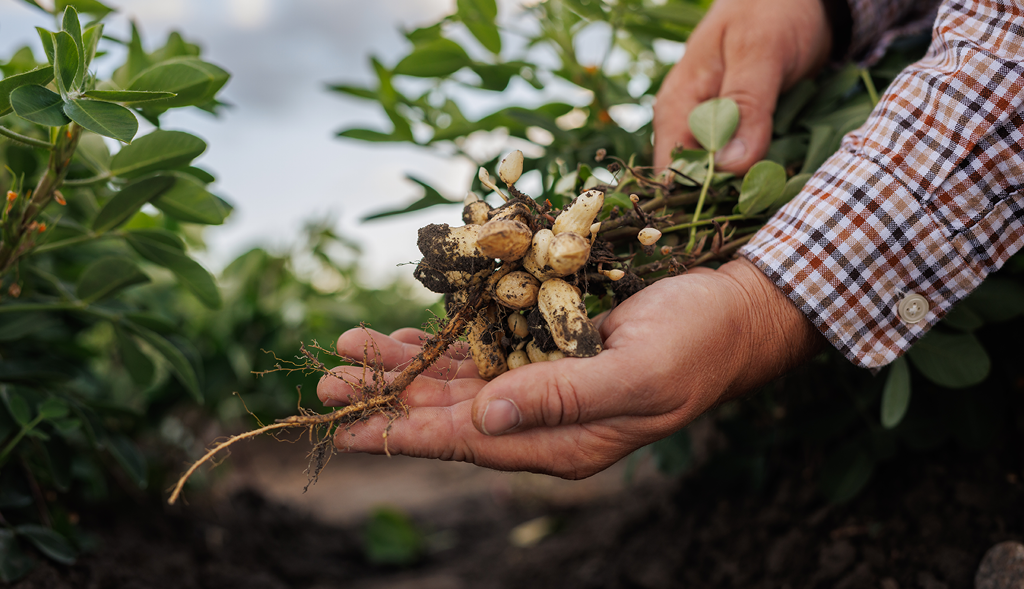
Local demand and export market
South Africa’s groundnut industry serves both the local and international markets. Domestically, groundnuts are consumed mostly as snacks, peanut butter and cooking oil. The local processing industry demands high-quality nuts with minimal aflatoxin contamination.
Key export destinations include the European Union, Japan and China. The demand for non-GMO, high-protein groundnuts is rising, positioning South African farmers favourably in the global market (Trade & Industrial Policy Strategies, 2024). Fluctuations in global prices, competition from Argentina and the USA, and strict export regulations remain challenges.
In the Quarterly Economic Overview of the Agriculture Sector: Vol 22, No 1, First Quarter 2025, the Department of Agriculture, Land Reform and Rural Development noted that while exports had decreased by 47% in the first quarter of 2024, compared to Q1 2023, local demand and imports of groundnuts increased by 17% in the same period. The report adds: “During Q1: 2024, consumption of edible groundnuts decreased by 18% relative to Q1: 2023. Consumption of edible peanuts is mostly dependent on price, which is dependent on the supply and demand of groundnuts. Consumption of peanut butter increased by 28% in Q1: 2024 relative to Q1: 2023.”
In March 2025, the South African Groundnuts Forum withdrew its long-pending application for higher import tariffs on roasted peanuts after waiting more than four years for a decision. The delay rendered the country’s R2.5 billion roasting segment unviable, forcing its closure and, according to trade specialist Donald MacKay, writing for IOL, effectively granting importers of roasted peanuts a lasting price advantage. Between 2022 and 2024, South Africa imported 1 490 tonnes of roasted groundnuts valued at R392 million.
But alongside these challenges, the outlook for new markets is improving. Following official visits to Vietnam, Indonesia and Malaysia in October 2025, President Cyril Ramaphosa placed agricultural exports high on his foreign-trade agenda. At the South Africa-Vietnam Business Forum in Hanoi, he and Prime Minister Pham Minh Chinh highlighted opportunities to expand cooperation in agro-processing and food trade. Vietnam imported agricultural products worth about US$34 billion in 2024, and Indonesia’s annual imports exceed US$29 billion, including significant volumes of peanuts. Economist Wandile Sihlobo of Agbiz noted that South Africa currently supplies less than 1 % of these markets, leaving scope for growth if tariff barriers can be eased and export partnerships strengthened.
Challenges in groundnut farming: pests and diseases
Groundnut crops face various pests and diseases that can significantly reduce yields if not managed properly.
Pests
- African bollworm (Helicoverpa armigera) attacks groundnuts, causing pod and leaf damage. Severe infestations can lead to economic losses if left unchecked.
- Thrips causes leaf distortion and stunted growth.
- Aphids transmit viral diseases such as groundnut rosette virus.
Diseases
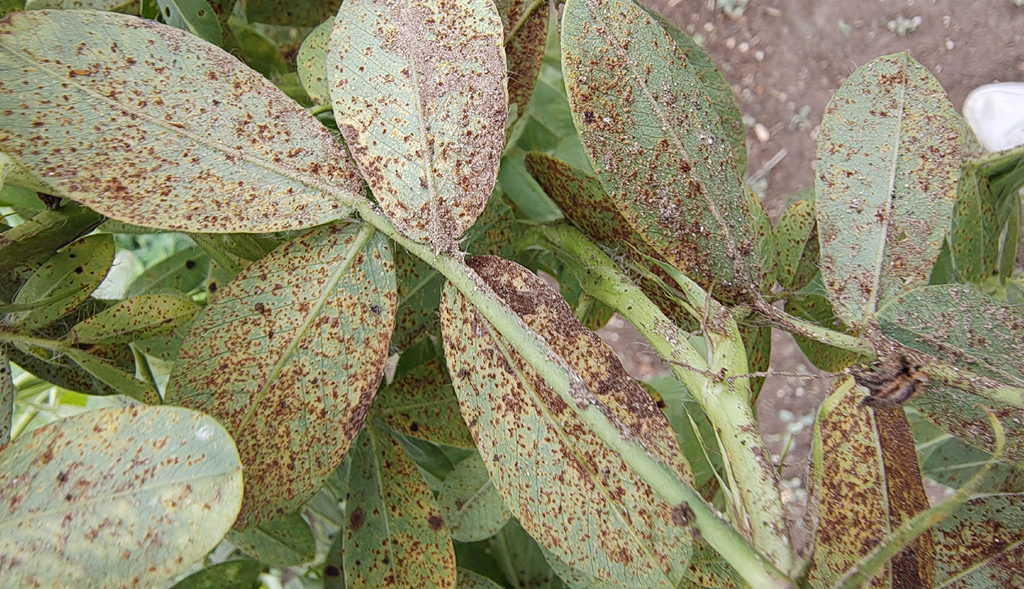
- Groundnut rust (Puccinia arachidis) causes severe leaf spotting, reducing photosynthesis.
- Aspergillus crown rot (Aspergillus flavus) leads to aflatoxin contamination, making the nuts unsuitable for human consumption.
Early and late leaf spot (Cercospora arachidicola and Cercosporidium personatum) affects foliage, reducing yields [(South African Groundnut Council, 2024)].

Custodia® 320 SC: control for early leaf spot and leaf blotch disease
Custodia® 320 SC, a suspension concentrate fungicide with systemic, translaminar and contact action, is an effective solution for managing early leaf spot and leaf blotch disease in groundnuts.
Application
Dosage: 1.0–1.25L/ha
Apply Custodia® 320 SC preventatively, starting not later than the beginning of flowering (10 to 12 weeks after planting), or as soon as disease symptoms are noticed.
A second application can be made 10 to 14 days later if necessary. Note the different prehavest withholding periods applicable to one or two applications.
The higher rate should be applied when infection levels and risk of disease development are high. Ensure the spray volume is sufficient to achieve good coverage of the crop; a spray volume of at least 300 to 500 litres of water per hectare is recommended. Do not exceed two applications per season.
Always read the label and follow the usage instructions. To download the label, click here.
Caution
Harmful if swallowed. Suspected of damaging fertility or the unborn child. Very toxic to aquatic life with long lasting effects.
Wear protective gloves, protective clothing, eye protection and face protection. Avoid release into the environment.
Custodia® 320 SC
Reg. no. L9342 in terms of Act 36 of 1947
Active ingredients: Azoxystrobin 120 g/l + Tebuconazole 200 g/l
Registration holder: ADAMA South Africa (Pty) Ltd; Reg. no. 1992/001741/07
Ground Floor, Simeka House, The Vineyard Office Estate, 99 Jip de Jager Drive, Bellville 7530