

Controlling Downy Mildew (Plasmopara viticola) on grapes
As with grapes grown in all regions of the world, South African table and wine grapes can be susceptible to diseases. The severity and prevalence of these depend on climate, grape varieties, farming practices and grape disease control put in place by farmers.
Downy mildew, which is caused by the fungus Plasmopara viticola, is a serious, potentially devastating disease which can cause considerable damage to grapevines. It thrives in warm, humid climates and poses a threat to both table and wine grapes on South African farms. The fungus lies dormant in contaminated plant residues on the ground and can survive for a number of years. Plasmopara viticola downy mildew on grape leaves can be identified by the appearance of light green to yellow spots on the upper surface. These spots have a greasy appearance. Under humid conditions, the leaves start to show a white, fluffy fungi at the bottom of the leaves. Spores emerge at the bottom of the oily spots and the spores are spread by rain and wind.
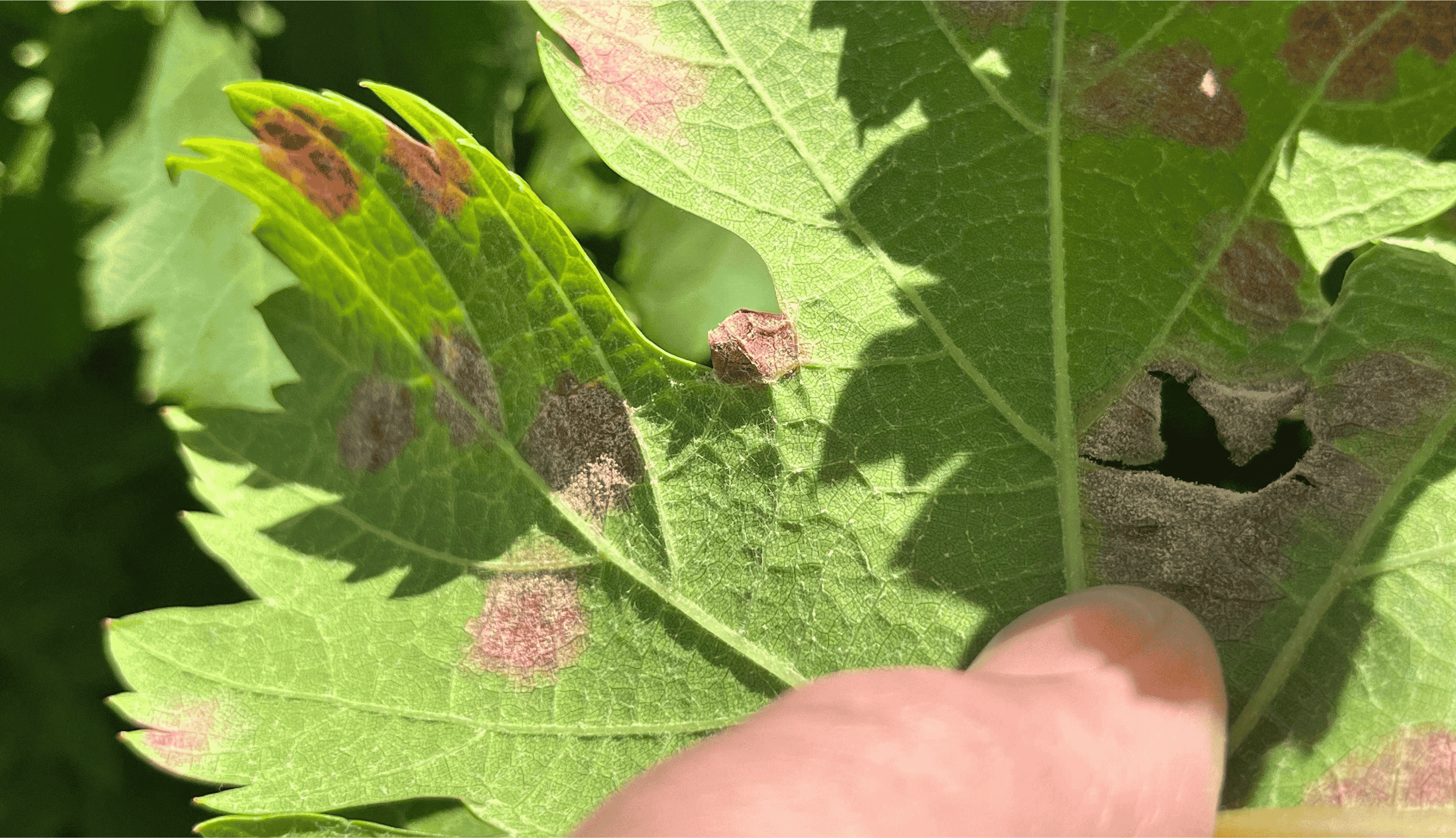
How downy mildew develops on grape plants
The downy mildew pathogen is able to survive winter as oospores, the sexual structures of Plasmopara viticola, in host tissues such as dead leaves and other decaying plant material in the vineyard and on the surface of the soil. When conditions during the growing season, such as temperature, moisture levels and high humidity, are favourable for the disease the spores germinate and infect leaves through the stoma at the bottom of the leaf.
Between 5 and 15 days after infections occur, oil spots appear on the surface of the leaves. Young grape bunches eventually turn brown and take on an oily form. The bunches dry out and eventually fall off the plant. When conditions are humid, a white, downy fungus organism appears on the grape bunches. The young berries which are infected stop growing and turn brown before shrivelling up and falling off the plant. The pathogen can also infect the young green shoots of the plant.
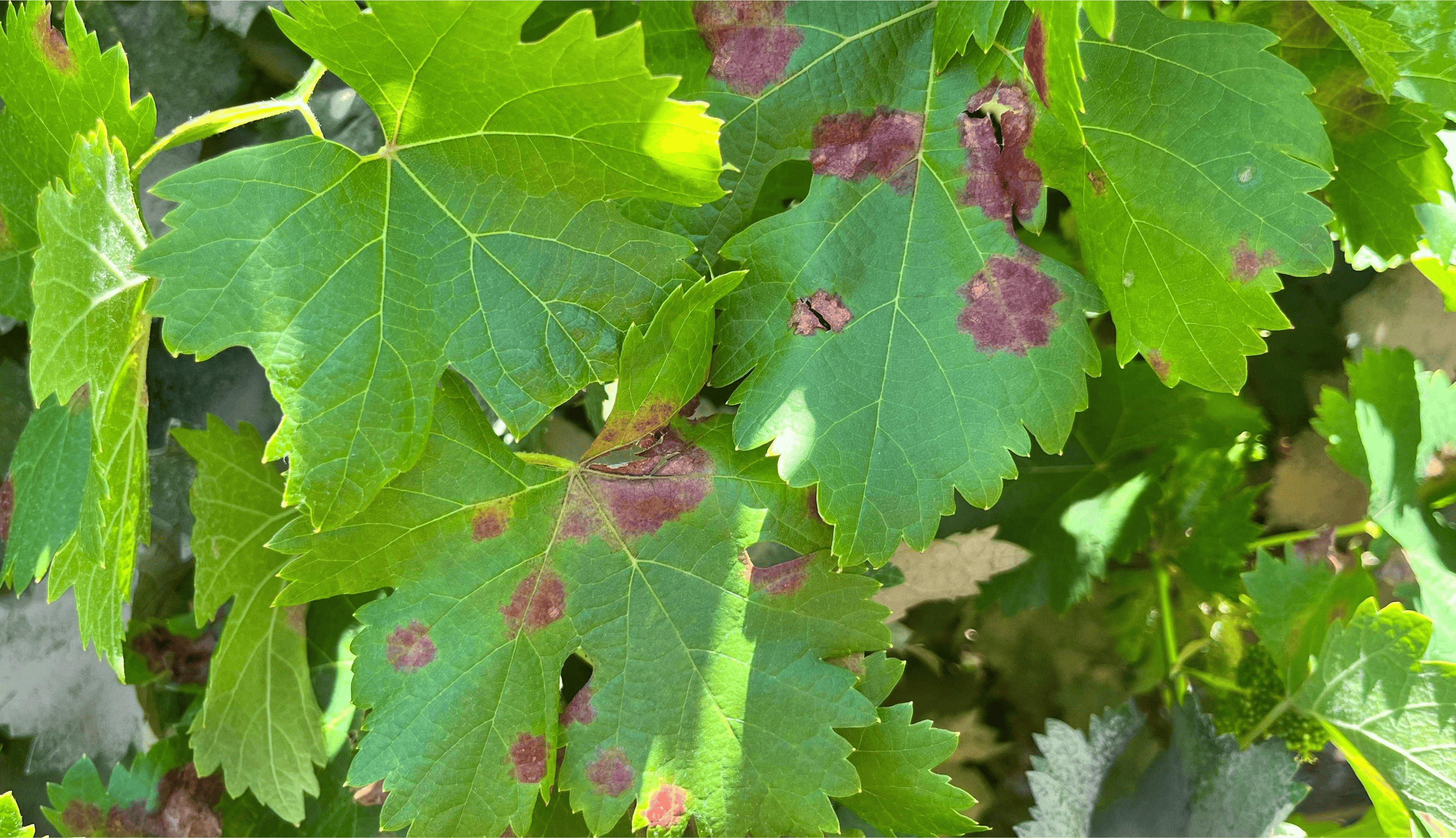
Control methods for downy mildew grape protection
It is important to manage and control downy mildew early in the season. Growers are advised to monitor the vines for the appearance of oil spots three to four weeks after bud break. There are various ways of curbing contamination, including implementing a preventive spraying programme using contact downy mildew fungicides. These must be sprayed before downy mildew infections and then twice weekly during periods of wet weather. It is crucial to ensure good coverage of the plants and to note that rain will decrease the levels of residue on the leaves.
Ensure good coverage of the plants and note that new growth will not automatically be protected. If infection is detected, spray the plants straight after the infection with systemic fungicides before the oil spots start to develop. Once oil spots appear, it is necessary to spray the plants with systemic downy mildew fungicides straight after a warm wet night.
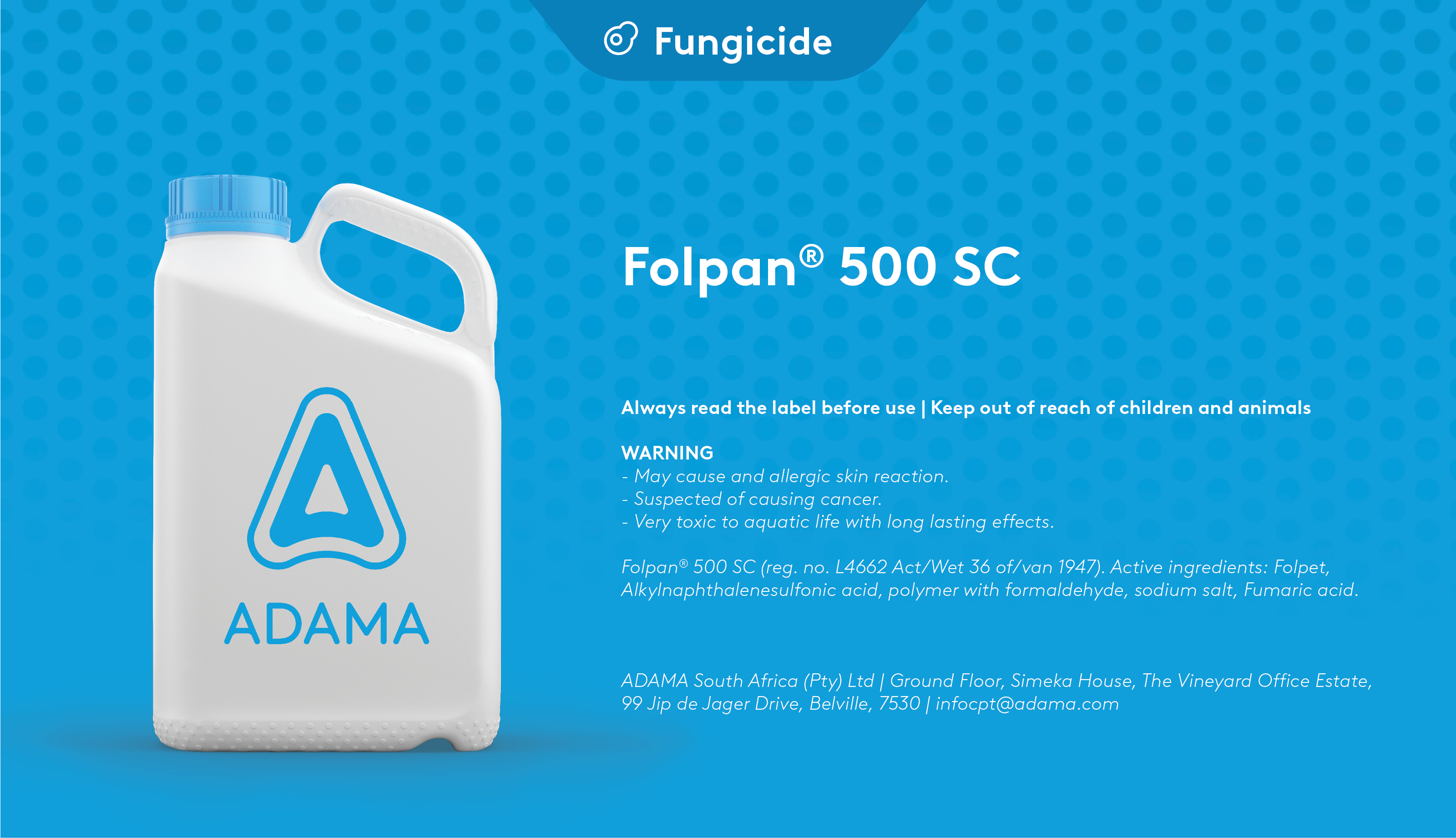
Chemical control methods for downy mildew on grapes
ADAMA’s Folpan® 500 SC (Reg. no. L4662 Act/Wet 36 of/van 1947) is a suspension concentrate, organic-based fungicide for the preventive control of downy mildew (Plasmopara viticola) in table and wine grapes; it also controls dead-arm disease and anthracnose in both, and Botrytis rot in wine grapes. The active ingredient is folpet and the product is classified in FRAC Group M04.
Folpet has been renewed in the European Union until September 2039 without additional restrictions following a rigorous, multi-year scientific review. For growers, this provides long-term regulatory certainty to keep Folpan® 500 SC in preventive downy mildew programmes at the appropriate growth stages and intervals, alongside fungicides from different FRAC groups to limit resistance risk.
Apply preventively and ensure thorough coverage of both the upper and lower leaf surfaces. In table grapes, use 200 ml per 100 L water only up to the pre-blossom stage, starting at bud swell and repeating at 7–10 day intervals depending on weather conditions. In wine grapes, the downy mildew programme is 200 ml per 100 L water with a first pre-blossom application when shoots are ~10 cm; repeat at 7–10 day intervals as conditions dictate. During blossom, treat only if flowering lasts longer than 14 days; post-blossom, apply two or more sprays at 7–14 day intervals according to risk.
Observe withholding periods: in wine grapes, the minimum interval between last application and harvest is 14 days; in table grapes, do not apply later than pre-blossom. Do not enter treated areas until spray deposits have dried unless wearing protective clothing.
Compatibility: Folpan® 500 SC can be tank-mixed with most commonly used insecticides and fungicides except lime, lime sulphur and Bordeaux mixture; it should not be applied with any other Botrytis remedy in wine and table grapes.
Warning: May cause an allergic skin reaction. Suspected of causing cancer. Very toxic to aquatic life with long-lasting effects. Wear protective gloves, clothing, eye and face protection; avoid release to the environment; store in a cool place away from food and feed.
Another ADAMA product that combats downy mildew in grapes is Mirador® 250 SC.
Important to remember
With any chemical, and in terms of ADAMA’s regulations, always read the labels before use:
Folpan® 500 SC
Mirador® 250 SC
Folpan® 500 SC
Take note of signal words, fungicide resistance and hazard statements on the labelling. ADAMA complies with the Regulations Relating to Agriculture Remedies (promulgated on 25 August 2023) under the Fertilisers, Farm Feeds, Agricultural Remedies and Stock Remedies Act, 1947 (Act 36 of 1947).
ADAMA South Africa (Pty) Ltd; Reg. no. 1992/001741/07
Ground Floor, Simeka House
The Vineyard Office Estate, 99 Jip de Jager Drive
Belville, 7530