

Controlling red scale and mealybug in citrus: An IPM guide for South African growers
Red scale and citrus mealybug are easy to underestimate and can become a costly problem when conditions favour them. Both pests feed on plant sap, both weaken trees and mark fruit. Mealybug also produces honeydew, which encourages black sooty mould. The result is lower vigour, poor fruit appearance and, in serious cases, fruit that cannot be marketed.
How to identify red scale
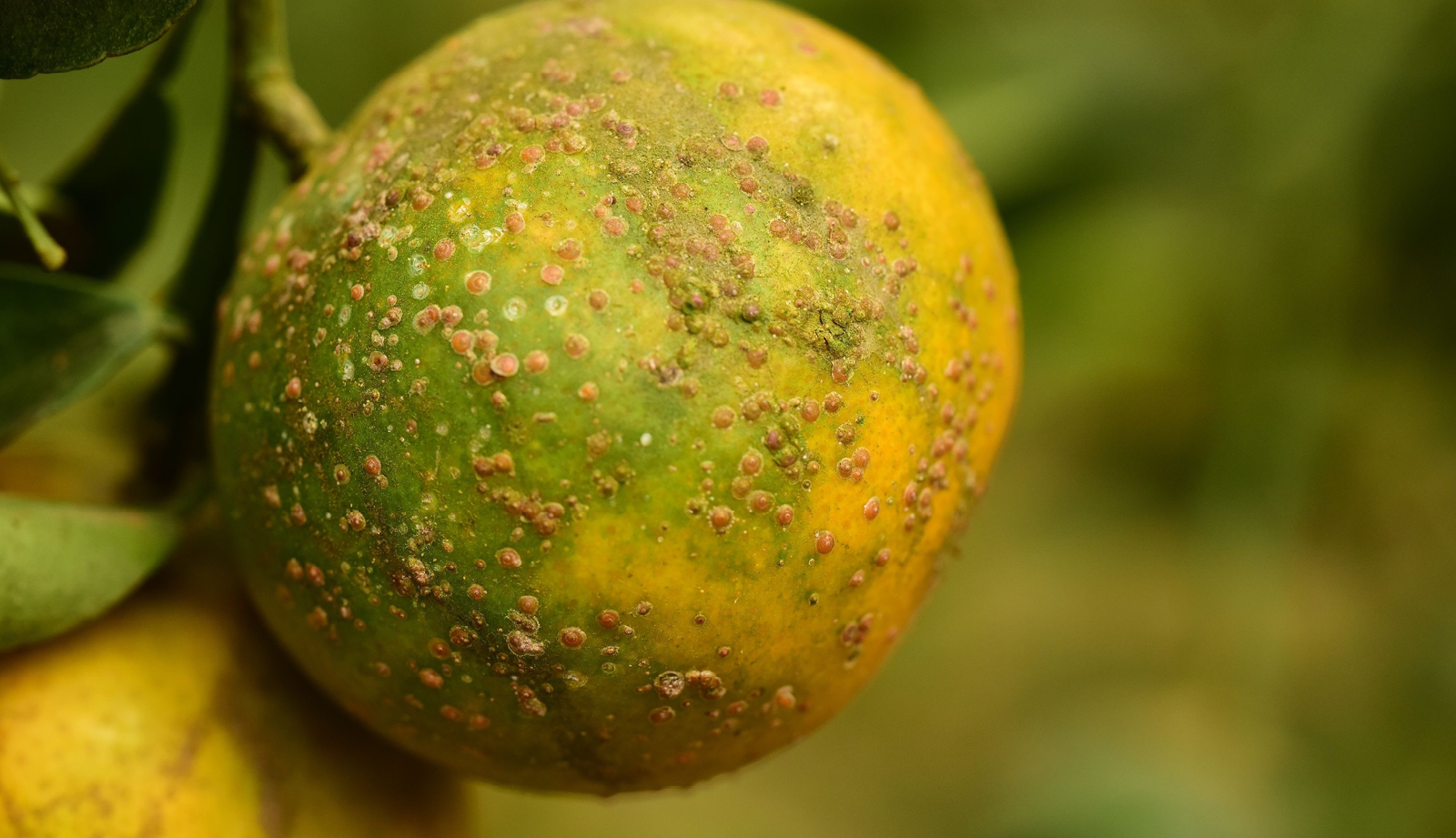
California red scale (Aonidiella aurantia), also called red scale, is a sap-sucking insect in the family Diaspididae. It occurs worldwide and has been recorded on more than 200 plant species. Its hosts include citrus, bananas, papayas, guavas, olives, potato tubers, ornamentals and cycads, as well as fig, cotton, mango, avocado, grape and rose.
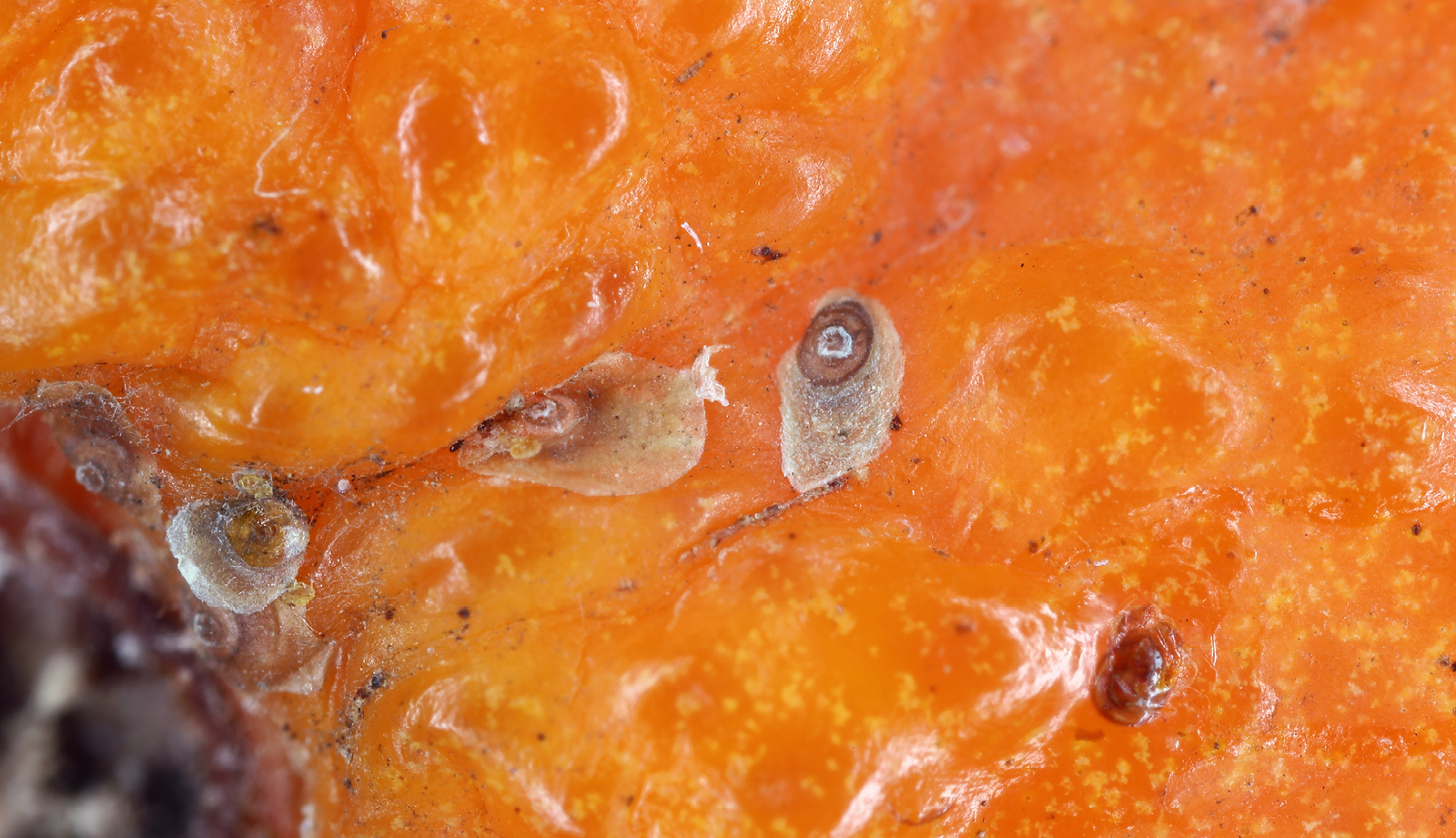
The insect is named for the circular, reddish-brown cover attached to the plant. The female is about 1,8mm in diameter and lives beneath this cover for her entire life. The male develops beneath a smaller, elongated cover. After about four months, he emerges as a winged insect, mates and dies within hours.
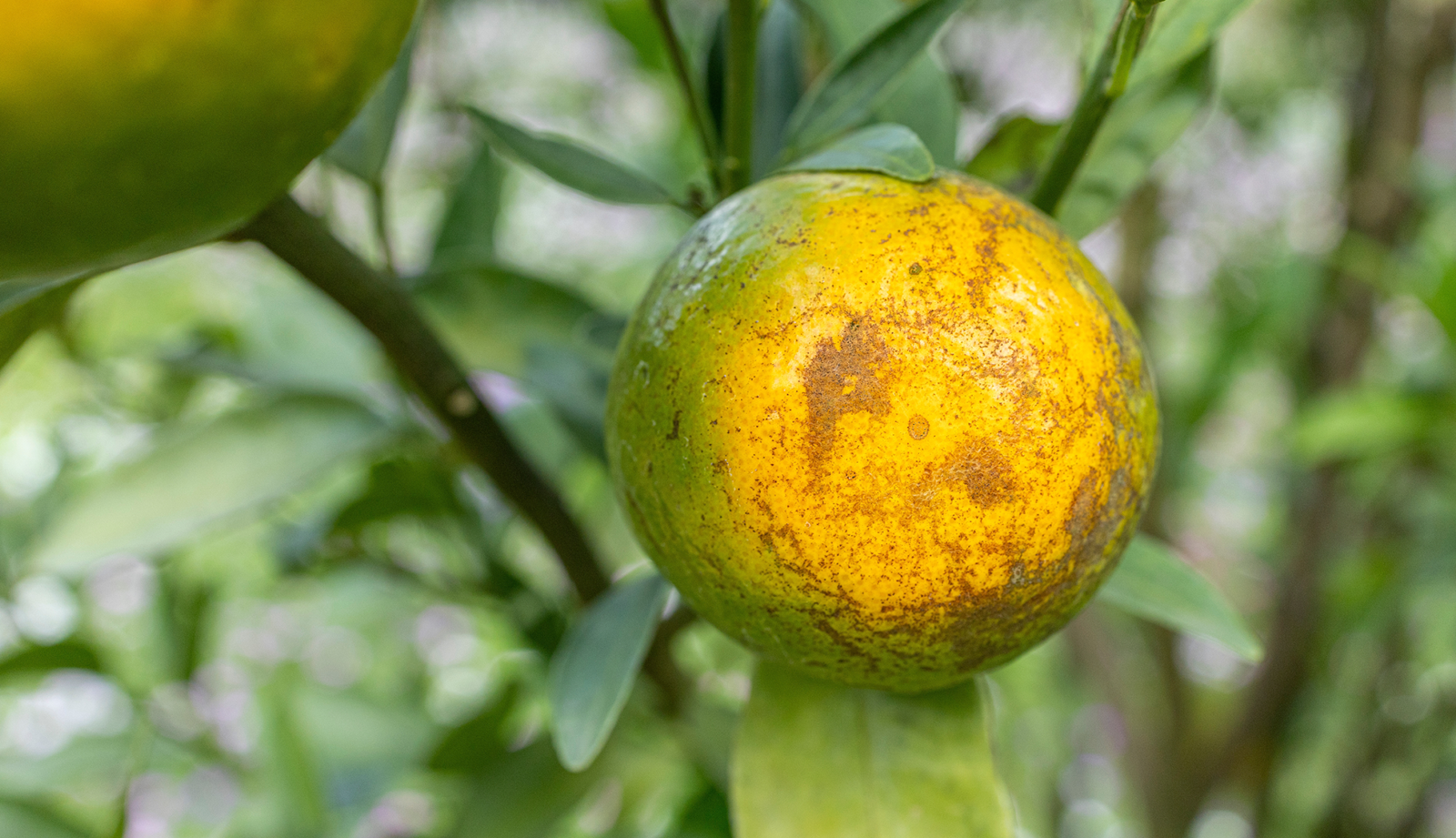
Red scale may be missed in a light infestation. It can occur on every part of the plant, but is usually most obvious on fruit. Heavy infestations give fruit a speckled appearance. Regular inspection of fruit, leaves, shoots and stems is therefore essential.
Damage caused by red scale
Red scale inserts its mouthparts into plant tissue and sucks the contents of the parenchymal cells. Its toxic saliva causes small yellow spots. Yellow dots can appear around gravid females. As numbers rise, shoots and branches may be lost. Leaves can droop and become discoloured, shoots can deform, and fruit-bearing twigs can suffer severe damage.
Fruit can be attacked at any stage. In a severe infestation, it may die or become unmarketable. Stems on young citrus can become so heavily covered with scale that the underlying surface is difficult to see. Young trees are especially vulnerable. If enough branches are lost, the tree may die.
A female produces between 100 and 150 live young. These crawlers emerge from beneath the protective cover and they can be moved through an orchard by wind, birds and fruit pickers. Once a crawler finds a suitable site, it settles, inserts its mouthparts and starts to suck sap. It is important to note that preventing establishment is easier than trying to recover a heavily infested tree.
How to identify citrus mealybug
Citrus mealybug (Plannococcus citri) occurs worldwide and has a wide, diverse host range. It is a greenhouse problem in temperate regions. In tropical and subtropical areas, it also affects outdoor crops. Hosts include fruit trees and ornamentals such as ficus, palms, schefflera, croton, kalanchoë, roses and gerbera. It is also found on cucumber, melon and aubergine.
Commercial crops at risk include apples, cassava, celery, citrus, coffee, aubergine, grapevines and grapes, groundnut, maize, millet, pears, potatoes, quinces, sorghum, sugarcane, sweet potato and tobacco. Most species feed on aerial plant parts. Some feed on roots. Others form galls, and a few can transmit harmful viruses.
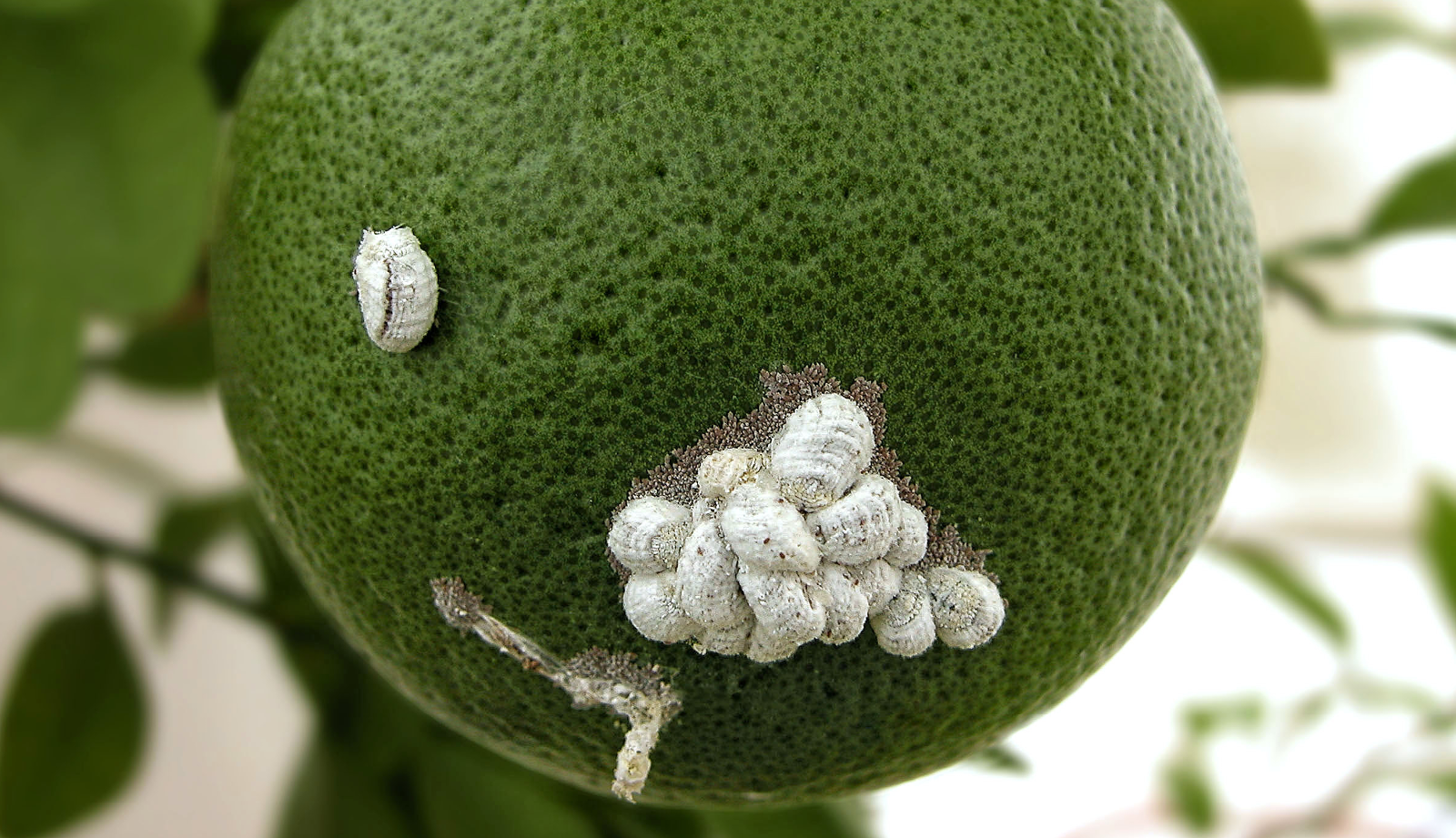
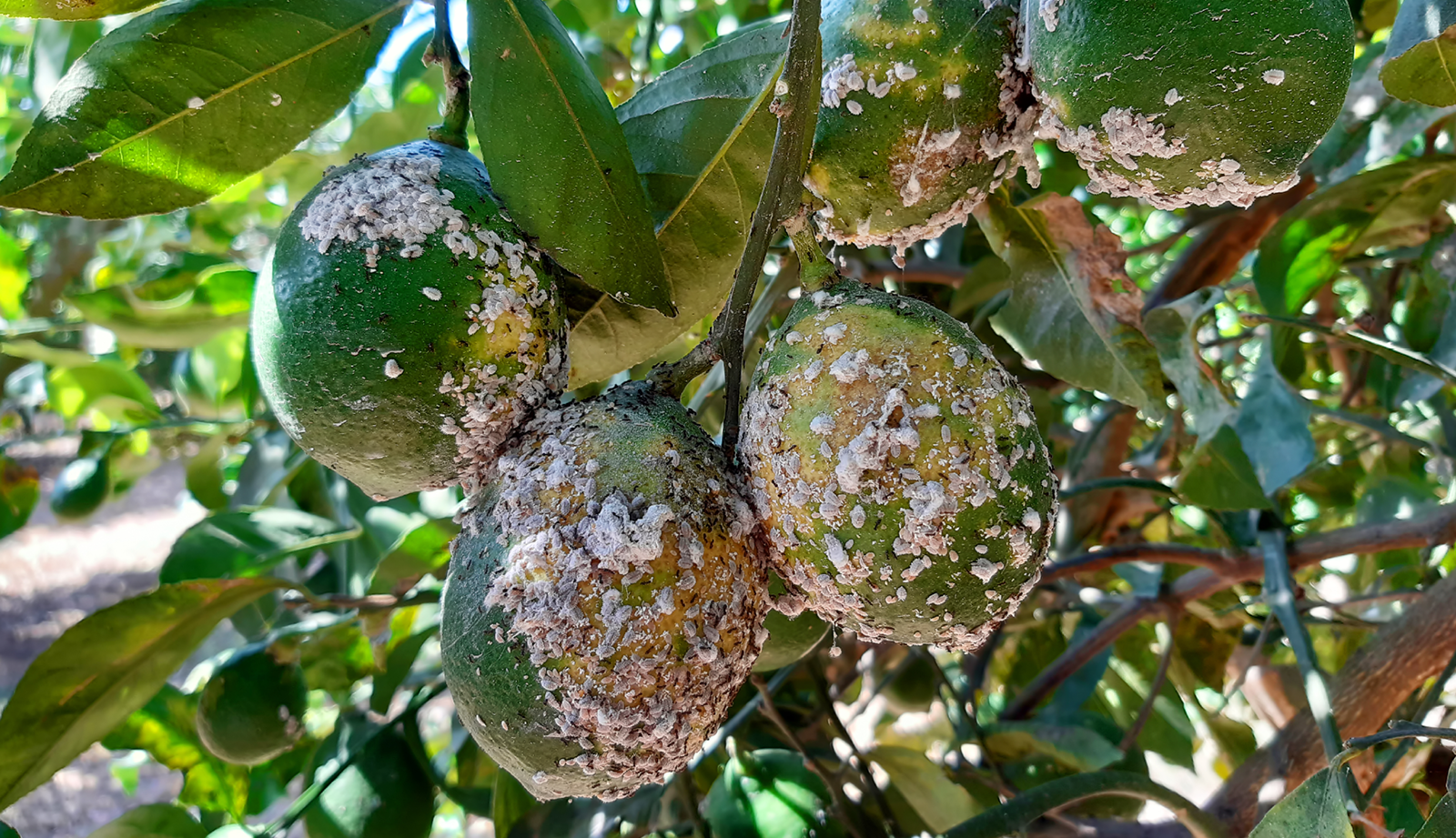
Male citrus mealybugs are 3-4mm long. They have one pair of wings, lack mouthparts and live for a short time while searching for females. Females are 4-5mm long. They have soft, segmented bodies covered in waxy secretions. They are wingless and tend to cluster on the plant. Look for white waxy masses on stems, fruit and the undersides of leaves, often along the veins.
Damage caused by mealybug
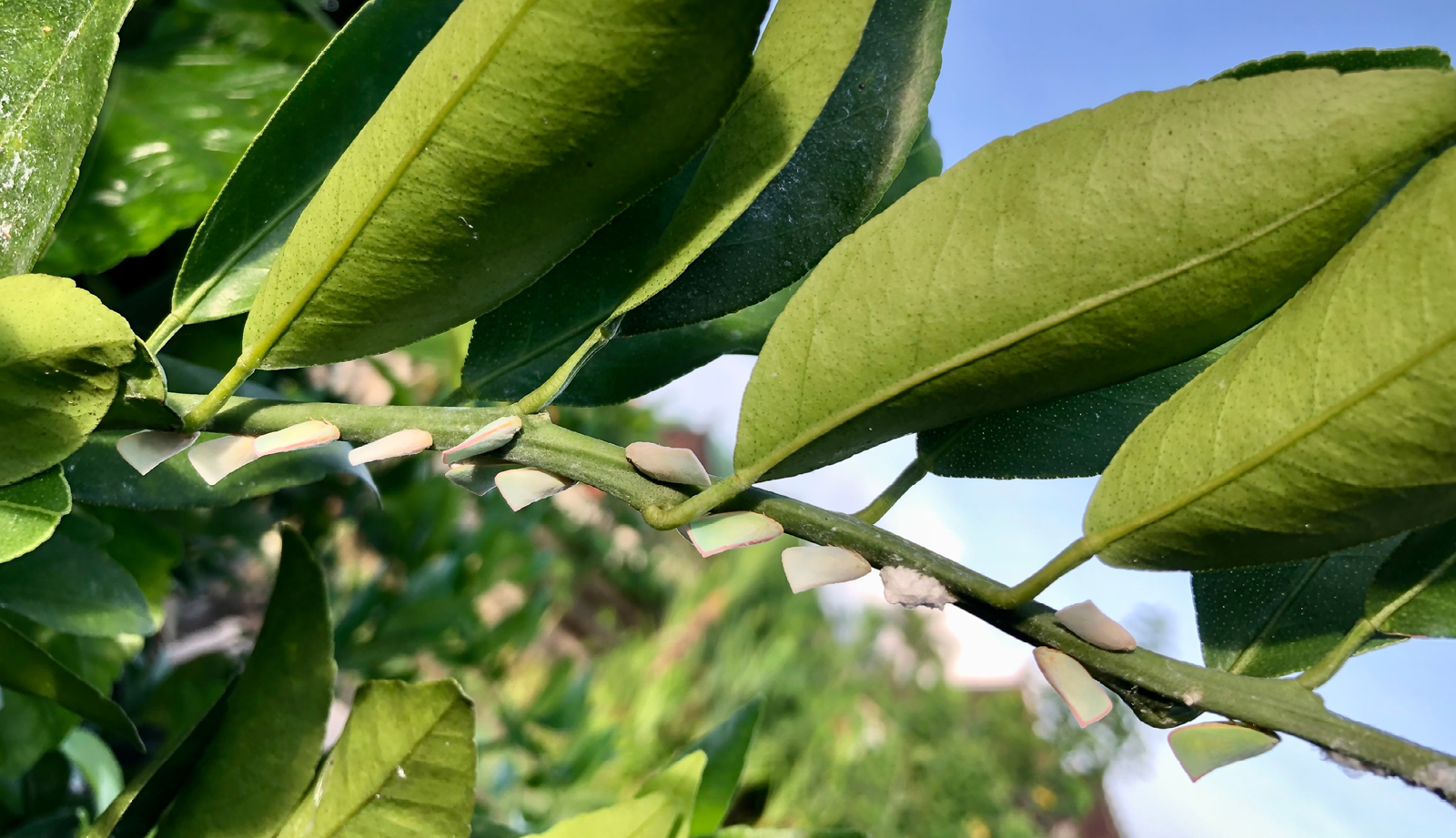
Nymphs and females suck sap from young leaves, growth points, fruit and roots. They can attack during the growing, flowering and fruiting stages. Feeding stunts growth, deforms and yellows leaves, and can lead to defoliation. Reduced photosynthesis lowers yield. Flowers and fruit may drop. When large amounts of sap are removed, plants can wilt.
Honeydew is the excess sugar excreted during sap feeding. It encourages dark sooty moulds, including Cladosporium species. The mould can reduce photosynthesis. Honeydew and waxy secretions also foul fruit and flowers. Fruit may discolour, develop lumps and become unfit for sale or export. If fruit is infested while underdeveloped, raised shoulders or lumpiness can occur around the calyx.
Mealybugs can attract secondary pests such as carob moths. They have also been associated with the fungal disease Alternaria navel-end rot, also known as black rot or stylar-end rot, which primarily affects naval oranges and lemons.
The life cycle varies between species. Some produce live young. Others lay up to 500 eggs at a time. Nymphs hatch from eggs and are highly mobile. They can travel considerable distances, which makes early detection and control important.
How to manage red scale and mealybug in citrus
An integrated approach is required to manage red scale and mealybug infestations in citrus. Chemical control provides a highly dependable route to reducing red scale and mealybug before populations become established. Monitoring determines the right timing and pest stage. Ant exclusion, biological control and cultural measures protect and extend the value of the chemical intervention.
The link between ants and mealybug
Pugnacious ants and Argentine ants can interfere with the natural enemies that help control red scale and mealybug. Ants are particularly attracted to the honeydew produced by mealybugs and other honeydew-producing pests, and their activity can disrupt biological control in the citrus canopy. Managing ant activity is therefore an important part of protecting natural enemies and improving the effectiveness of biological control.
- Fit sticky bands or other trunk barriers to stop ants climbing into the canopy.
- Use aluminium foil as a barrier over which ants cannot climb.
- Prune lower branches so they do not touch the ground. Keep leaves off the ground as well since they can form bridges.
- Place registered chemical ant baits on the orchard floor, following the product label warnings and usage advice.
- Recheck the orchard. Ants may return mealybugs to the plant after they have been knocked down.
Biological control of red scale and mealybug
South African growers rely heavily on augmentative releases of natural enemies, especially as harvest approaches. This helps manage pests while meeting export MRL restrictions. It also protects the natural-enemy complex that supports longer-term control.
- For red scale, use the parasitic wasp Aphytis melinus and the predatory ladybird Rhyzobius lophanthae, also known as Rhyzobug.
- For mealybug, use the predatory ladybird Cryptolaemus montrouzieri, known as the mealybug destroyer, and the parasitic wasp Coccidoxenoides perminutus.
- Other useful natural enemies include ladybird beetles and their larvae, lace-wing larvae, hoverfly larvae and several species of parasitic wasps.
A note on thrips in citrus
Thrips (Scirtothrips aurantia) is another citrus pest that requires corrective management. Reducing thrips on the early spring flush may lower levels on fruit after fruit set.
Monitor the spring flush by scouting for infestation and damage. Yellow sticky cards can be used during the spring flush, blossom and after blossom has dropped. Differentiate citrus thrips from blossom thrips and onion thrips. Identification may require a good microscope, although a trained eye with a magnifying glass can be sufficient. Distinguish males from females and adults from larvae because thresholds can differ by life stage. Traps are useful, but visual fruit scouting by trained scouts remains important.
- High-risk period: in northern areas, until the end of November; in southern areas, until the middle of December. An average of 2-8 thrips per trap per week indicates the need to spray.
- Low-risk period: in northern areas, until the end of December; in cooler southern areas, until the first week of February. An average of 5-17 thrips per trap per week indicates the need to spray.
ADAMA’s solution for the control of red scale and mealybug in citrus
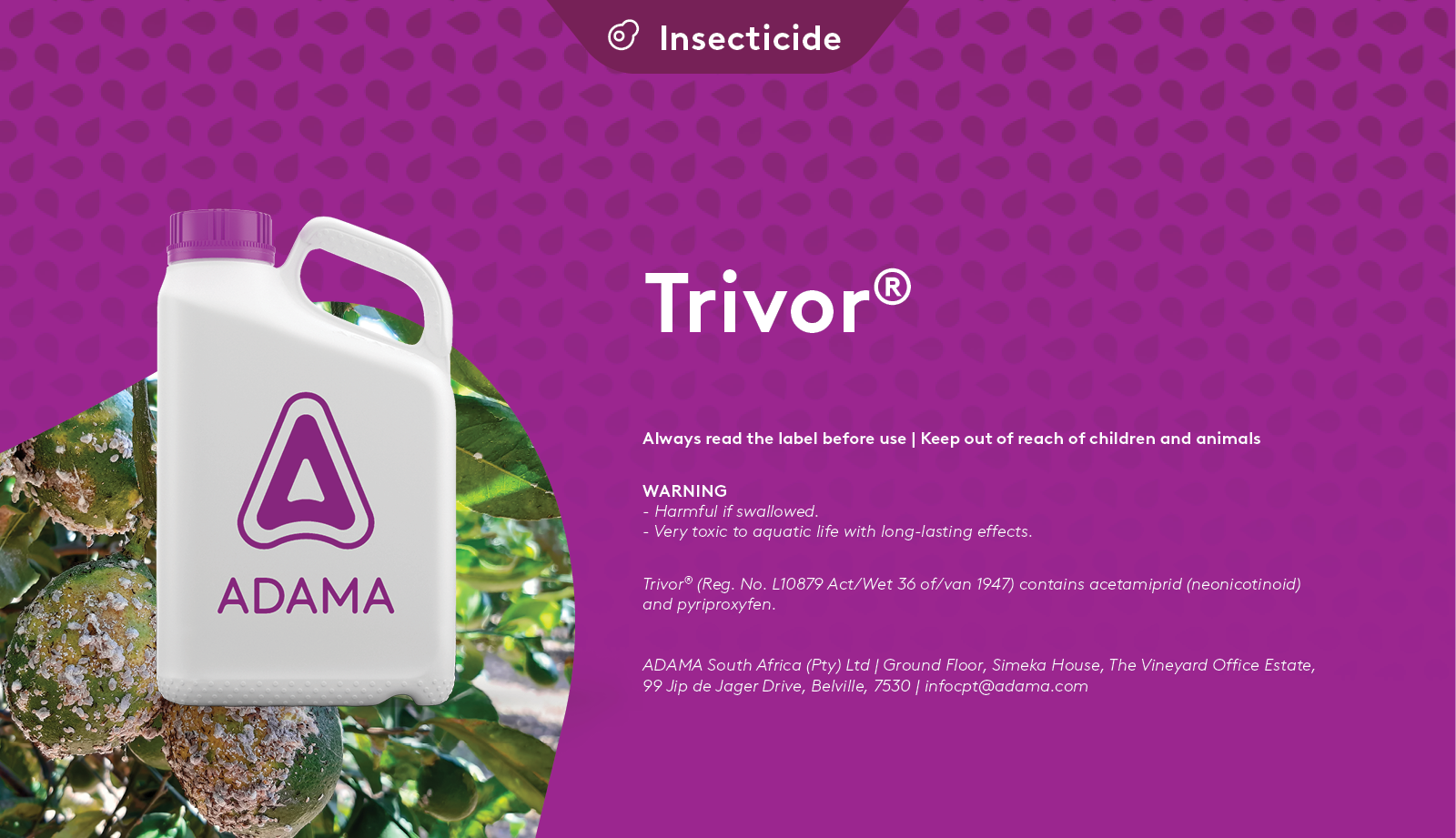
ADAMA’s Trivor® (Reg. no. L10879 Act 36 of 1947) is a dispersible concentrate contact and stomach insecticide with insect growth-regulant activity for the control of pests in citrus and grapes. It is registered for the control of red scale (Aonidiella aurantia), mealybug (Plannococcus citri) and thrips (Scirtothrips aurantia) in citrus, and the control of mealybug (Plannococcus citri) in grapes (grapevines). Its active ingredients are pyriproxyfen and acetamiprid.
For citrus, apply Trivor® at 90% petal drop, as a full cover spray to the point of runoff, ensuring thorough coverage of fruit and foliage throughout the crop canopy. Monitor for mealy bug and red scale crawlers and apply when first crawlers are noticed. Do not apply to well-established populations dominated by mature adult insects. Continue monitoring for crawlers, and if required apply a second application after a minimum spray interval of 14 days. Monitor for thrips from the start of flowering and apply when the action threshold is reached, typically before calyx closure. Do not apply to well-established populations dominated by mature adult insects. Continue monitoring for thrips, and if numbers are moderate to high apply a second application after a minimum spray interval of 14 days.
To delay the development of resistance, apply Trivor® as part of an integrated management strategy for the control of the pests indicated, followed by or alternating with insecticides with a different mode of action.
The local maximum residue levels (MRLs) will not be exceeded if Trivor® is used according to the label instructions. However, the local export marketing bodies must be consulted regarding application timing, withholding periods and specific tolerances of countries where produce will be exported to.
Warnings to consider include that Trivor® is harmful if swallowed, and is very toxic to aquatic life with long-lasting effects. It is toxic to birds, moderately toxic to bees and should be handled with care. Store in the closed, original container in a cool, well-ventilated area, away from direct sunlight, food, feed and other agricultural chemicals. TRIVOR® is not flammable but avoid contact with heat, flames and sparks and extremely high temperatures.
Always read the instructions and warnings on the label here.
Important to remember
With any chemical, and in terms of ADAMA’s regulations, always read the label before use. Take note of signal words and hazard statements on the labelling. ADAMA complies with the Regulations Relating to Agriculture Remedies (promulgated on 25 August 2023) under the Fertilisers, Farm Feeds, Agricultural Remedies and Stock Remedies Act, 1947 (Act 36 of 1947); and always provides the correct names of active ingredients in its products.
ADAMA South Africa (Pty) Ltd
Ground Floor, Simeka House
The Vineyard Office Estate
99 Jip de Jager Drive
Belville, 7530
infocpt@adama.com
Common FAQs
How to identify red scale infestation on citrus trees?
California red scale (Aonidiella aurantii) appears as small, circular, reddish-brown scales attached to the fruit, leaves, shoots or stems of citrus trees. Light infestations can be difficult to spot, but as numbers increase the fruit develops a speckled appearance. Yellow spots may also form around feeding insects, while severe infestations can cause leaf discolouration, loss of shoots and branches, and damage to fruit. Regular inspection of fruit, leaves, shoots and stems is important for early detection.
What are the common signs of mealybug infestations on citrus trees?
Look for clusters of soft-bodied, white, wax-covered insects on fruit, stems and the undersides of leaves, particularly along the veins. Other signs include yellowing or distorted leaves, poor growth, flower or fruit drop and sticky honeydew. The honeydew encourages the growth of black sooty mould and, together with the insects’ waxy secretions, can foul and discolour fruit.
How can I get rid of citrus mealybugs?
Citrus mealybugs are best managed using an integrated pest management approach. Monitor trees regularly so infestations can be treated while populations are still low. Biological control options include predatory insects and parasitic wasps. Ant control is also important because ants can protect mealybugs from their natural enemies. Where chemical control is required, use a product registered for citrus mealybug and apply it according to the label, taking the pest’s life stage and recommended application timing into account.
ADAMA’s Trivor® is registered in South Africa for the control of citrus mealybug (Planococcus citri). The label recommends monitoring for crawlers and applying the product when the first crawlers are noticed rather than waiting until the population is dominated by mature adults.
What insecticide can be used to control red scale in citrus?
The most appropriate insecticide depends on the scale species, crop, stage of infestation and products registered for that particular use. Early treatment is important because mature scale insects are protected by their covering and can be more difficult to control. An integrated management programme combining monitoring, biological control and correctly timed chemical control can provide more effective long-term management.
For California red scale (Aonidiella aurantii) in citrus, ADAMA’s Trivor® is a registered control option in South Africa. It should be applied according to the product label when crawlers are first detected and as part of an integrated resistance-management programme.