

Fungal Diseases in Grapevines
Various types of grape vine fungus impact grape farming in South Africa. These include anthracnose, downy mildew, dead-arm disease and Botrytis rot in wine grapes, dead-arm disease, anthracnose and downy mildew in table grapes. Let’s take a look at three of these grapevine diseases.
Dead arm
You may have heard the term “dead arm” in discussions about fungal diseases affecting grapevines. The term has become less frequently used since it was discovered that what farmers and scientists thought was one single disease is actually two distinct fungi each with their own symptomology that are known to occur at around the same time. Phomopsis cane and leaf spot is caused by the fungus Phomopsis viticola and Eutypa dieback occurs due to Eutypa lata.
Phomopsis viticola
In the case of Phomopsis cane and leaf spot, which is one of the first fungal diseases to appear in the growing season, small, reddish spots occur on new shoots, which eventually run together and form large black lesions that may crack stems, causing them to drop. Yellow and brown spots on leaves and eventually rotting fruit are other signs of Phomopsis.
Eutypa lata
Lesions in the wood, often at pruning sites, are a possible indication of Eutypa. These lesions develop under the bark and can be difficult to spot. They tend to cause a flat area in the bark; if the bark is peeled back, well defined dark lesions can be seen. After a period of up to three years, the areas beyond the lesion will begin to show symptoms, which include stunted shoot growth, and leaves that are yellow and cupped. Although symptoms may disappear in the mid-summer, without treatment, the underlying issue remains and death of the plant will ensue.
Downy mildew
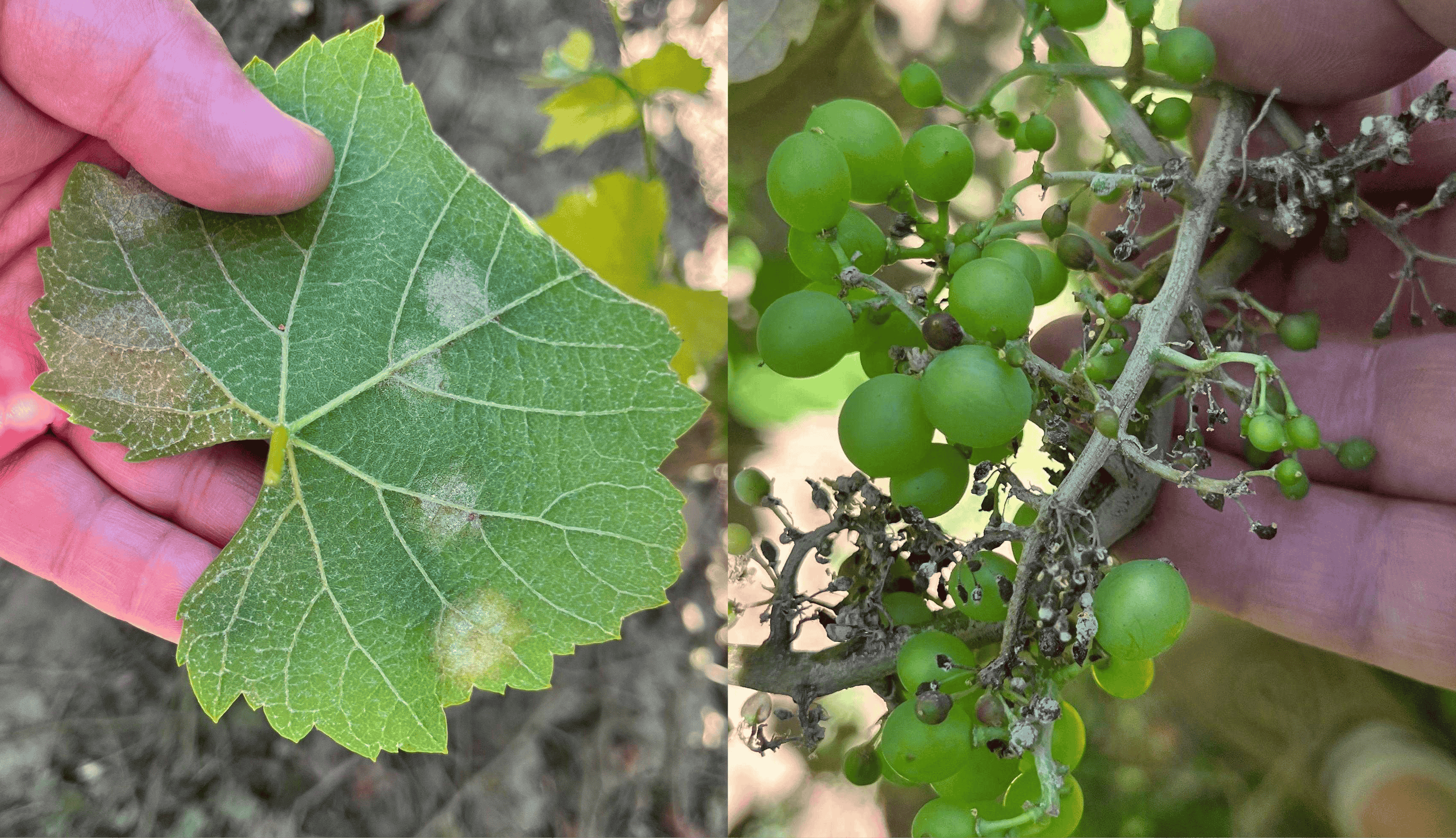
Downy mildew, caused by Plasmopara viticola, is another of the grapevine diseases and ranks amongst the most devastating vineyard fungal diseases. It can destroy bunches and cause defoliation of grapevine leaves, resulting in yield loss. Only the green parts of the plant are attacked, and symptoms include lesions that begin as round, yellow and oily, and progress to being angular and reddish-brown on more mature leaf edges. A downy fungal growth occurs on the underside of the leaf after warm, wet nights. Infected bunches become a brownish-purple colour and may shrivel and drop. New shoots are also vulnerable and may become necrotic.
Find out more about protecting your grapes from downy mildew with effective control strategies.
Powdery mildew
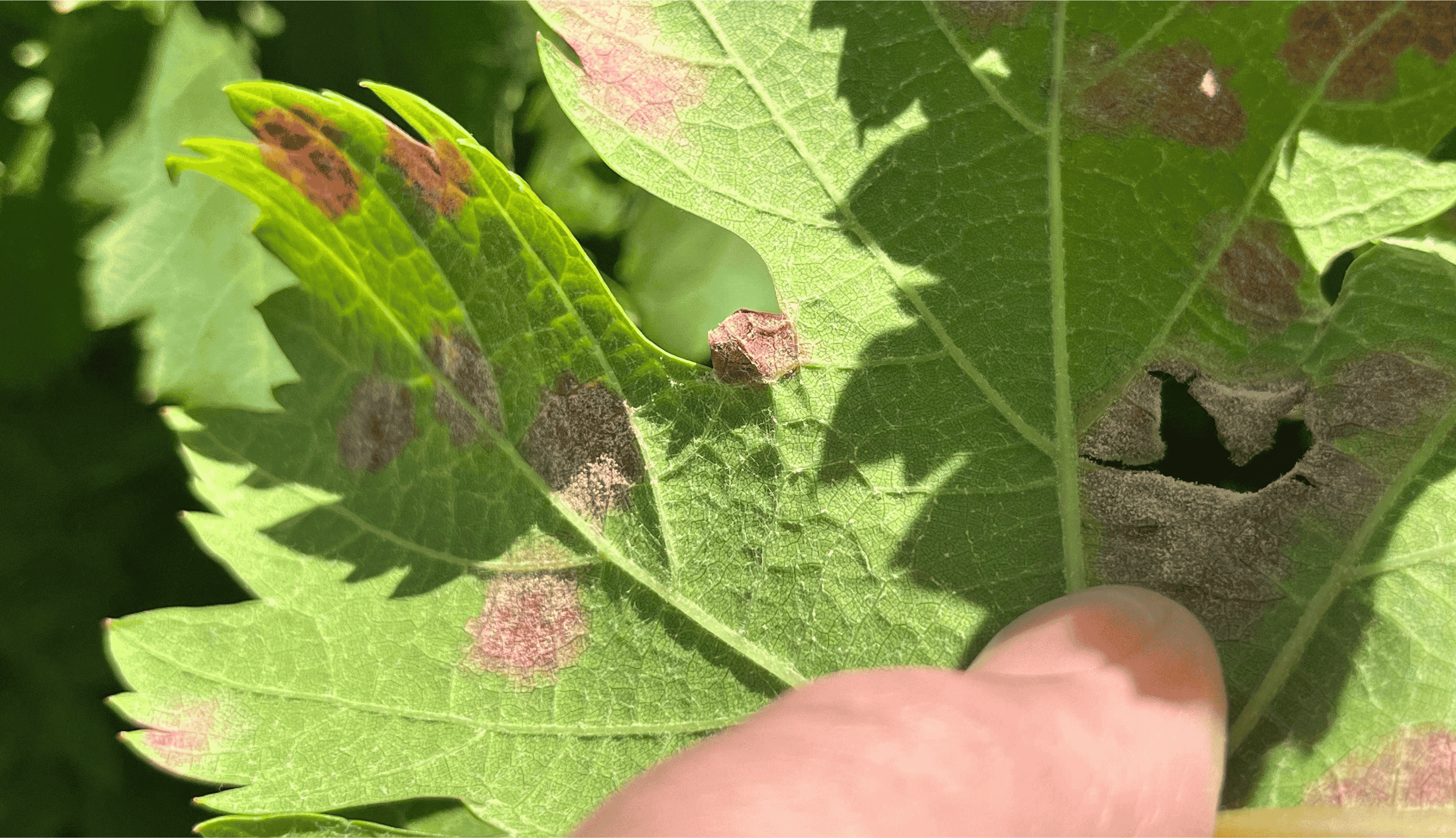
Powdery mildew in South Africa’s vineyards is caused by Erysiphe necator and presents as an ash-grey to white powdery growth on green tissues, with yellow-green blotches on leaves, oily grey patches on shoots and russeting, cracking and scarring on berries that can impair flavour and export quality. Local research shows the pathogen now overwinters widely in Western Cape vineyards. Warmer, wetter springs linked to shifting climate patterns are increasing early-season risk, while population shifts in the Western Cape’s grapegrowing regions have been associated with reduced sensitivity to some DMI fungicides, underscoring the need for resistance-aware spray programmes. In practice, South African growers should combine sanitation and canopy management with timely, preventative fungicide applications and rotation across modes of action appropriate to local sensitivity profiles, informed by monitoring and regional guidance.
Grape vine fungus treatment methods
Careful pruning, clearing and the application of an effective fungicide can treat Phomopsis viticola and Eutypa lata as well as Plasmopara viticola. Application of the product needs to occur at the correct time and under the best weather conditions possible. When pruning, all dead and diseased wood should be removed and burned. To prevent ongoing infections, leaves should be cleared from around the vines because the disease overwinters in infected leaves and spreads via spores in the spring. While the timing may depend on the local conditions and aspects such as weather patterns and topography, fungicidal application often depends on the growth stage of the plant and will usually coincide with specific growth or developmental stages.
Folpan® 500 SC
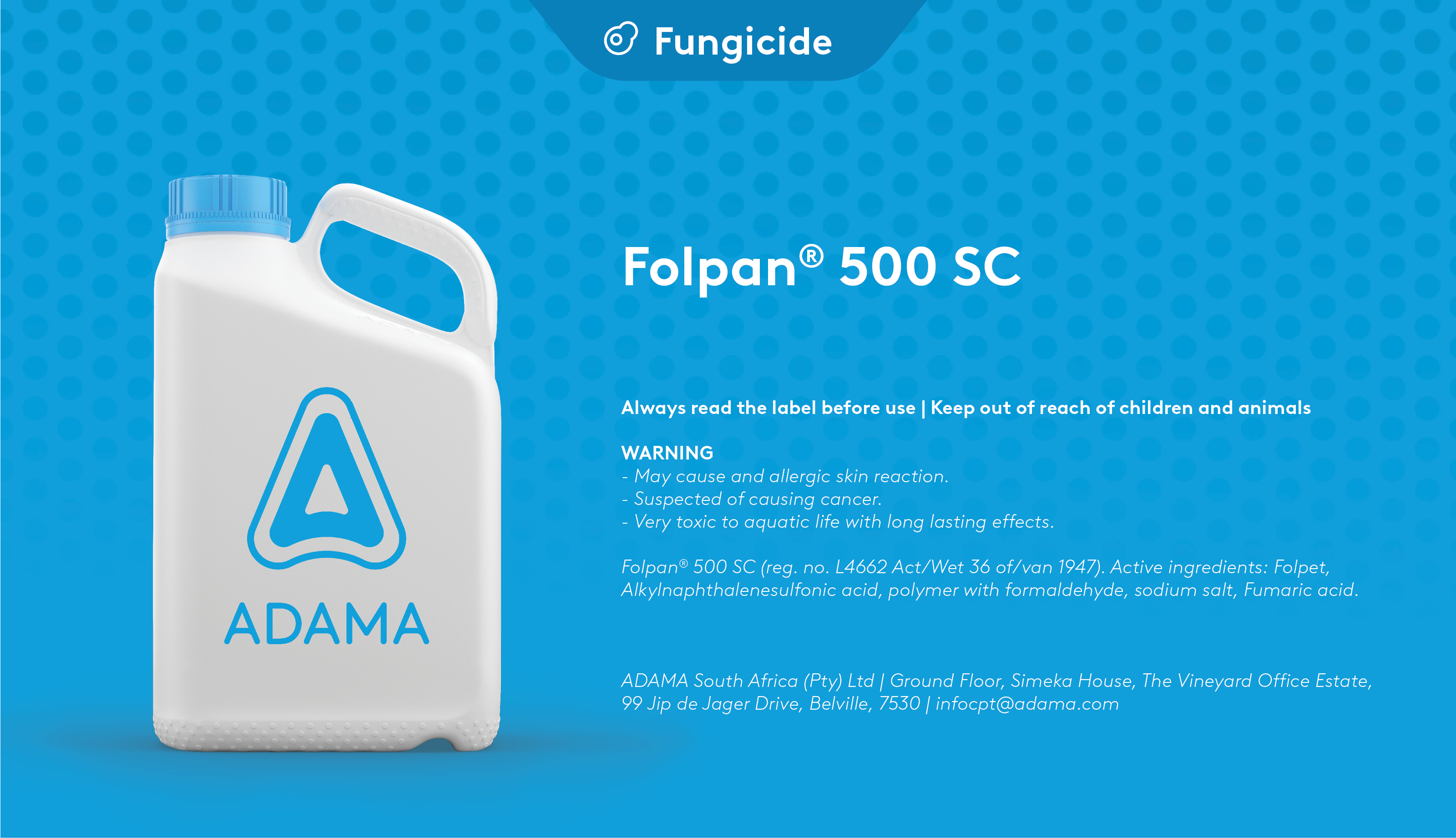
Folpan® 500 SC is a fungicide that has been shown to be effective in the treatment of dead-arm disease, anthracnose and downy mildew in table grapes, and dead-arm disease, anthracnose, Botrytis rot and downy mildew in wine grapes.
The active ingredient, Folpet, has been renewed in the European Union until September 2039 without restrictions, following an extensive multi-year scientific review. This outcome reinforces the product’s safety profile and ongoing value in resistance management across multiple crops, including table and wine grapes. For growers, it provides long-term regulatory certainty and supports continued integration of Folpan® 500 SC into preventative spray programmes at the appropriate growth stages and intervals, alongside fungicides with different modes of action to minimise resistance risk.
What is Folpan® 500 SC?
Folpan® 500 SC fungicide is an effective preventative control for a range of fungal diseases primarily in grapes, potatoes and tomatoes. It is classified as a FRAC group code M04 fungicide. In general, Folpan® 500 SC is shown to provide excellent prophylactic protection; it should be applied in rotation with other fungicides to prevent fungicidal resistance occurring.
For table grapes, Folpan® 500 SC is recommended only until pre-blossom stage with application at 7-10 day intervals. In the case of wine grapes, application is recommended at bud swell for the treatment of Phomopsis viticola and Eutypa lata (dead arm disease) and at specific pre-blossom, blossom, and post blossom stages for the treatment of downy mildew (Plasmopara viticola).
For effective protection, the product should be applied to the upper and lower leaf surfaces.
Always read the warnings and directions on the label and follow these with care. Alternatively, contact your ADAMA field team for more information.
Folpan® 500 SC – Active ingredients: Folpet, Alkylnaphthalenesulfonic acid, polymer with formaldehyde, sodium salt, Fumaric acid
Registration number L4662 referencing Act/Wet 36 of/van 1947
Address of Registration holder: 99 Jip de Jager Drive, The Vineyards Office Estate, Simeka House, De Bron 7530, South Africa
CAUTION: This product may cause skin allergy and is potentially carcinogenic. It is very toxic to aquatic life, with long-lasting effects.
Nimrod®
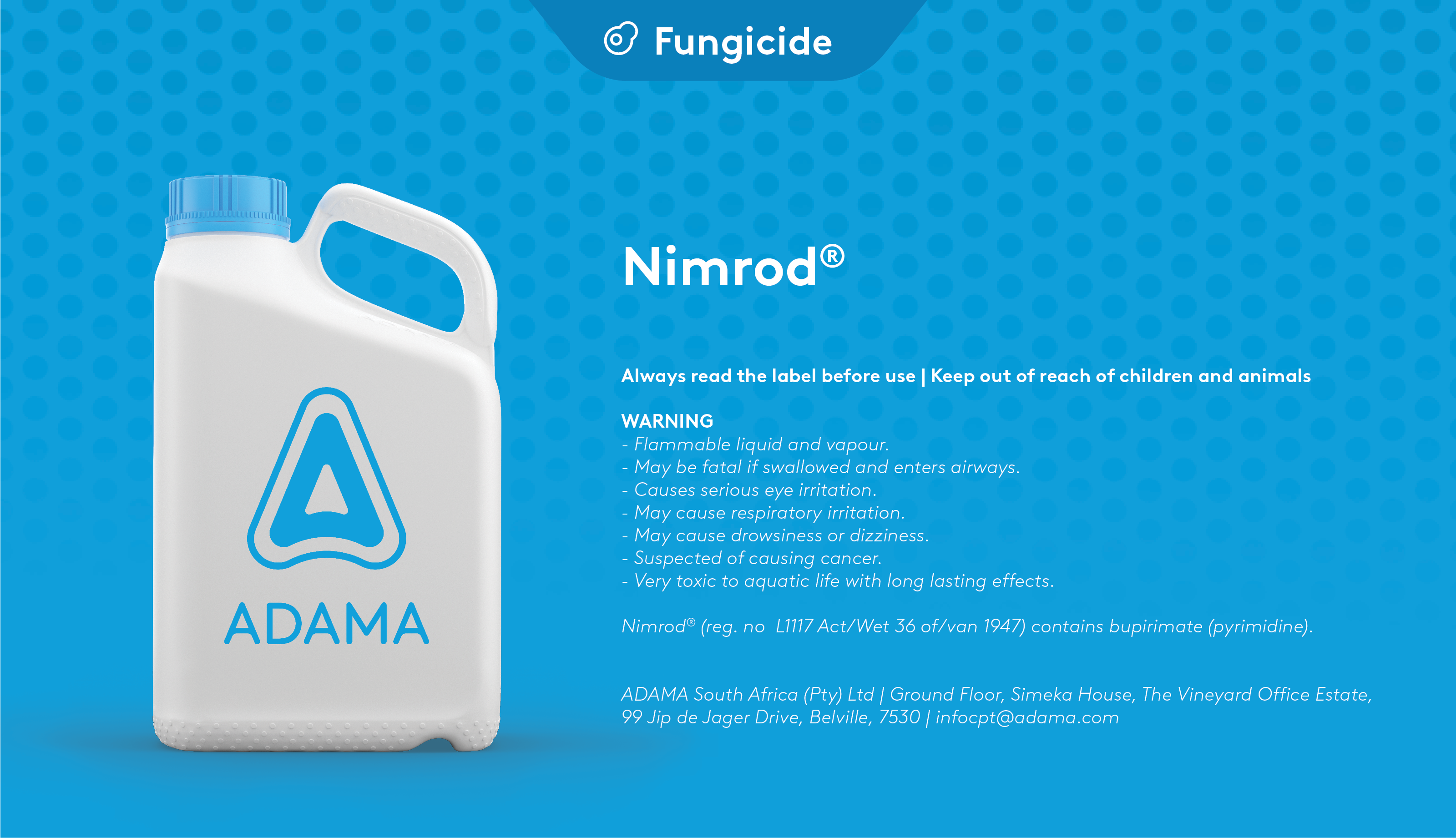
Nimrod® is a emulsifiable, systemic, concentrate fungicide whose active ingredient is bupirimate (pyrimidine). It is registered for the control of powdery mildew in table and wine grapes, as well as apples, stone fruit, cucurbits and mangoes. It is used preventatively when conditions favour disease development and should form part of an integrated, resistance-aware spray programme in alternation with fungicides with different modes of action.
How to use Nimrod®
For table grapes and wine grapes, apply 80–120 ml/100 litres water as a full-cover spray as soon as weather conditions are favourable for the development of powdery mildew. Use the higher rate when disease pressure is high. Repeat every 10–14 days, but do not exceed three Nimrod® applications per season. Do not apply to wine grapes after the onset of flowering. Observe a withholding period of 28 days for both table and wine grapes.
Always read the warnings and directions on the label and follow these with care. Alternatively, contact your ADAMA field team for more information.
Nimrod® – Active ingredient: bupirimate (pyrimidine)
Registration number: L1117 referencing Act/Wet 36 of/van 1947
Address of Registration holder: 99 Jip de Jager Drive, The Vineyards Office Estate, Simeka House, De Bron 7530, South Africa
DANGER: Flammable liquid and vapour. May be fatal if swallowed and enters airways. Causes serious eye irritation. May cause respiratory irritation. May cause drowsiness or dizziness. Suspected of causing cancer. Very toxic to aquatic life with long-lasting effects.