
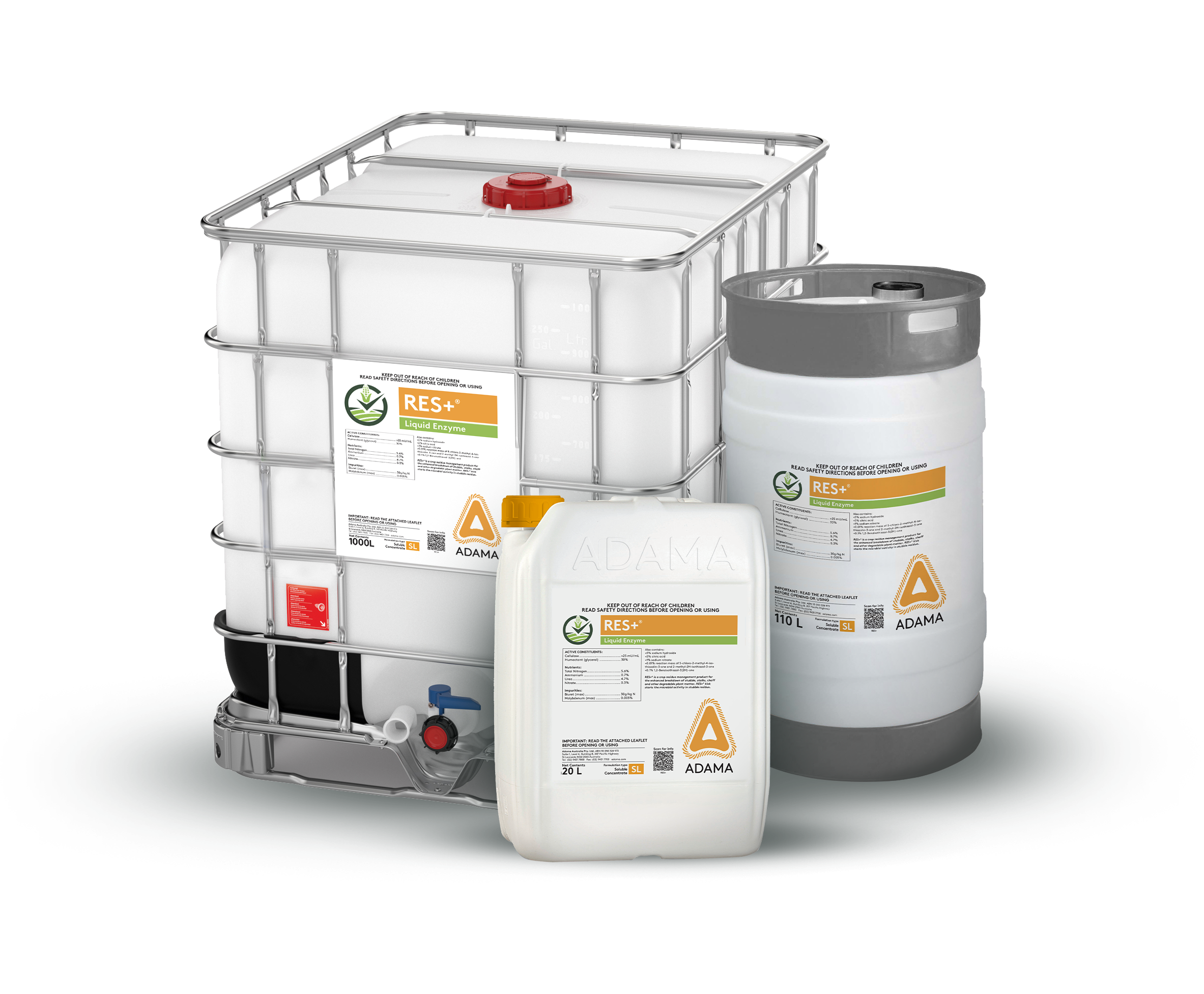
RES+®
For enhancing the breakdown of stubble and plant matter to speed up natural degradation.

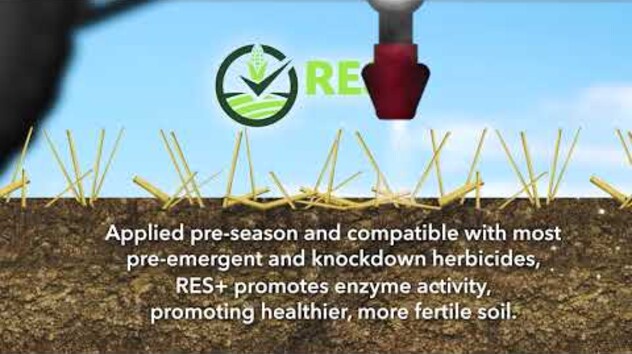

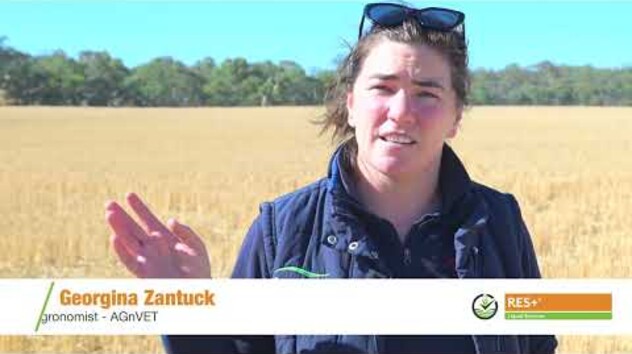

Here is a short video providing some general information on what Res+ is, how it works and what using it might mean for you in your farming system. You can also see how Res+ has worked in managing sorghum stubble for Ross Pomroy on the Darling Downs and how stubble from previous crops and its impact on trafficability has been a major issue for mixed cropping farmer Jeremy Coghlan, at Bung Bong in central Victoria. Scroll down for more information in the Res+ FAQs.
Key features:
• Facilitates the breakdown of stubble in minimum/zero till farming systems
• Improved stubble/residue trafficability during planting
• Improved organic matter, microbial activity and soil health
• Improved moisture conservation
• Improved crop and pasture establishment
• Compatible with many fallow herbicides
RES+ is a registered trademark of Elemental Enzymes Ag and Turf, LLC, used under license and distributed exclusively by Adama Australia. For more information on Elemental Enzymes please visit: www.elementalenzymes.com.au
Res+ FAQs
What does Res+ do?
- Res+ is a crop residue management tool. The unique enzyme-based formulation helps to accelerate the natural microbial degradation process of breaking down crop residues (stubble).
Can I mix it with fallow or residual herbicides?
- Yes, Res+ is broadly physically compatible. ADAMA has tested Res+ with a wide range of knockdown and residual herbicides. Good agitation is always recommended. Our tech guide has a summary of tested compatible herbicides.
When should I apply Res+?
This depends on your individual situation:
- Improving trash flow at next year’s planting will depend on environmental conditions, stubble length and load. We recommend applying Res+ as soon as possible after harvest. Trials show that a minimum of 6-8 weeks is usually required to make a noticeable difference to the integrity of the stubble.
- Speed up breakdown to access crop residue nutrients: apply Res+ post-harvest and up to 4 weeks prior to planting.
What’s in the drum?
- The main active ingredient is cellulase which is a cell wall degrading enzyme. It is contained in a nutrient package made up of 5.6% nitrogen plus micronutrients including magnesium, boron, copper, manganese, molybdenum and zinc.
- Also present is a humectant which helps attract moisture to the stubble. Moisture is an essential component for successful cellulose degrading microbe activity
I run a zero/min-till farming operation. Will I lose stubble cover?
- The stubble requires microbial activity to break it down. If the stubble is standing over the fallow period, the microbes will work from the bottom up. If there are no outside influences or environmental factors, the stubble will remain standing. You should notice that it becomes much easier to break or pull out over time.
Does the N in the formulation help with nutrition?
- Not directly. The Nitrogen in the formulation is there to feed the microbes kickstarting their stubble breakdown process.
Do I need to store Res+ in a cold room?
- No, Res+ does not contain live microbes and doesn’t need to be kept cold. Res+ should still be kept below 37’C to ensure formulation stability.
How long can I store Res+?
- The enzyme is viable for at least 24 months after manufacture if stored appropriately. However, we do not recommend carrying open containers from one season to the next.
My crop lodged and harvest was a mess, can Res+ help me avoid burning the stubble?
- Yes – try to apply Res+ as soon as possible. You may need to increase water rate to improve spray penetration through to the lower stubble closer to the ground. Coverage is key. Enzyme activity will be localised to the area of spray deposition. The enzymes will not multiply and spread through the plant. Res+ enzyme activity accelerates degradation by creating an environment that allows saprobes (degradative microbes) more access points to work their way through the carbon material (cellulose, hemicellulose and lignin)
Does stubble length matter, whether the header has cut high or low at harvest time?
- Standing stubble will generally take longer to degrade as it is not in close contact with the rich source of microbes found in the soil. The longer your stubble the higher the proportion of your total stubble load which is subject to slower degradation. Long stubble may be more prone to being dislodged during the planting operation because of more standing stubble weight and a greater surface area to catch or be “knocked” by planting machinery.
- Both tall and short stubble will have had similar degradation activity at ground level and should appear pull out of the ground easily. Taller stubble, if not given long enough to degrade is more likely to still build up during planting. The stubble is breaking apart at ground level rather than being pulled out.
What about non-cereal crops, will Res+ help with other types of stubble?
- Yes, all crops contain carbon, with each crop containing varying ratios of lignin, cellulose and hemicellulose. The saprobes (degradative microbes) work first on the cellulose and hemicellulose and lastly on the lignin. It is more difficult to break down and crops with high content of lignin will take longer for the microbes to break down.
Will it reduce carryover disease for my next crop?
- Possibly. This is currently being trialled for various diseases in different crops. Logically if the crop material is breaking down there is reduced host matter for pathogens to develop.
Does Res+ effect living plants or green material?
- The cellulase enzyme contained in Res+ is very specific in its activity. The breakdown of cellulose networks in dead plant material. Live plant material is unaffected.
Can Res+ be used to help breakdown green or brown manure crop?
- Res+ only has activity on dead material, spraying a green manure crop with the product will not increase the breakdown.
- After desiccation and once the crop has browned off, an application of Res+ will help in speeding up the breakdown and nutrient recycling.
Can I graze the treated stubble?
- There is no WHP, however we recommend speaking to your veterinarian or livestock nutritionist regarding potential copper deficiency due to the molybdenum component in the formulation. This applies to weeds (green material) present in the stubble at time of application.
How long does the product take to work?
- The enzymes start to work as soon as they're applied, but noticeable effects are impacted by the environment. If conditions are warm and have moisture, effects improving trafficability can be noticeable within 4-6 weeks, but most times it will take 8 – 12 weeks for effects to be noticed. Res+ should start providing a benefit to soil nutrition through stubble breakdown within 4-6 weeks.