
Ateka®
Ateka is an insecticide that helps manage aphids, mealybugs, thrips, scales and whiteflies across a range of fruit, vegetable and broadacre crops.

Ateka from ADAMA is a high-load insecticide specifically designed to combat sucking pests with unmatched efficiency. Powered by the innovative Ayalon™ Formulation Technology, Ateka accelerates penetration for enhanced protection and earlier population control you can trust.
The active ingredient spirotetramat has class leading systemic activity, allowing for enhanced coverage. This formulation is powered by Ayalon, a unique surfactant package the combines surfactants, solvents and wetting agents to improve the performance of this premium chemistry.

KEY FEATURES:
Ateka is a fully systemic insecticide that penetrates into the leaf tissues and enters the vascular system of the plant (both the xylem and phloem) and moves throughout the plant after application, traveling both upward and downward to new growth, leaves, and roots. Once inside the plant, it stays active for an extended period, providing long-lasting residual control, especially in perennial crops.
Control occurs primarily when pests feed on treated plant tissue. Targets developing life stages like eggs, nymphs, and immatures by disrupting normal molting. While adult males are largely unaffected, the product reduces egg viability in females, helping suppress future pest generations. Results may not be immediate, but population pressure declines over time as reproduction is interrupted.
Performance is influenced by plant health, temperature, and timing. Preventative or early applications deliver the strongest and most consistent control, making Ateka an effective tool for long-term pest management.
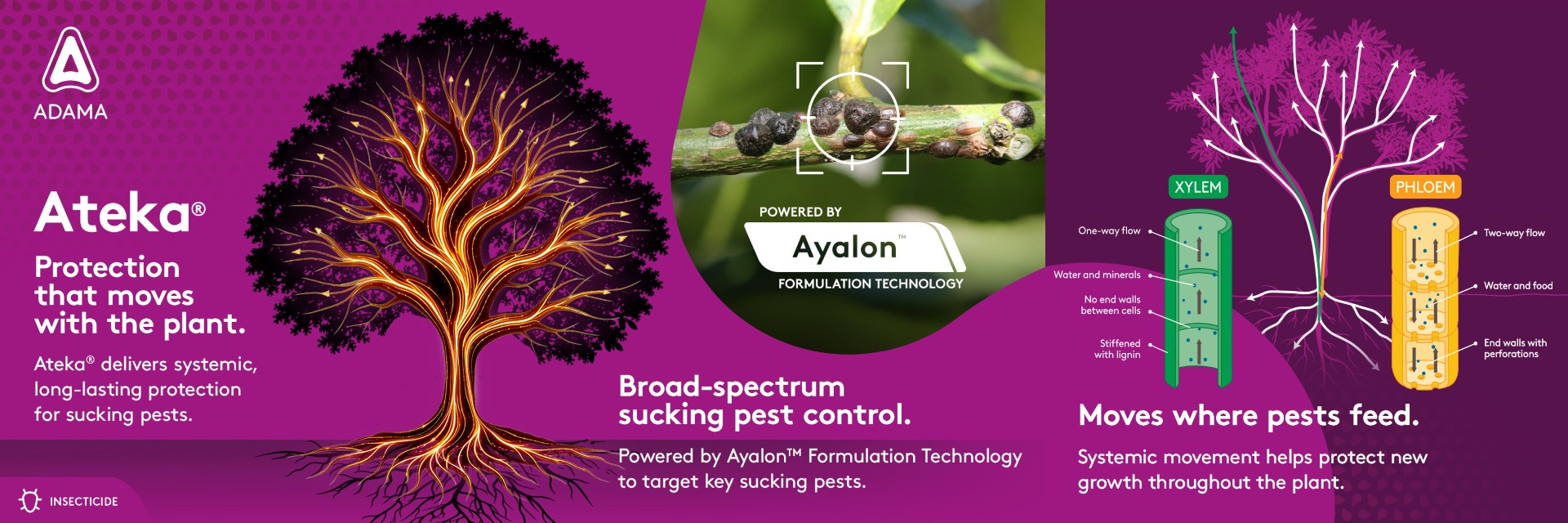
PROTECTION THAT MOVES WITH THE PLANT:
✔ Delivers faster leaf penetration and plant uptake than other spirotetramat products.
✔ Improved leaf penetration helps protect the AI from rain and environmental loss.
✔ Controls sucking pests like aphids, psyllids, mites, scales, thrips and more.
✔ Has higher concentration of the AI in the droplets for enhanced performance.
✔ Works in a wide range of applications including citrus, pome, stone fruit, grapes, leafy greens and fruiting vegetable crops.
✔ Flexible application window for growers with best results when sprayed early.
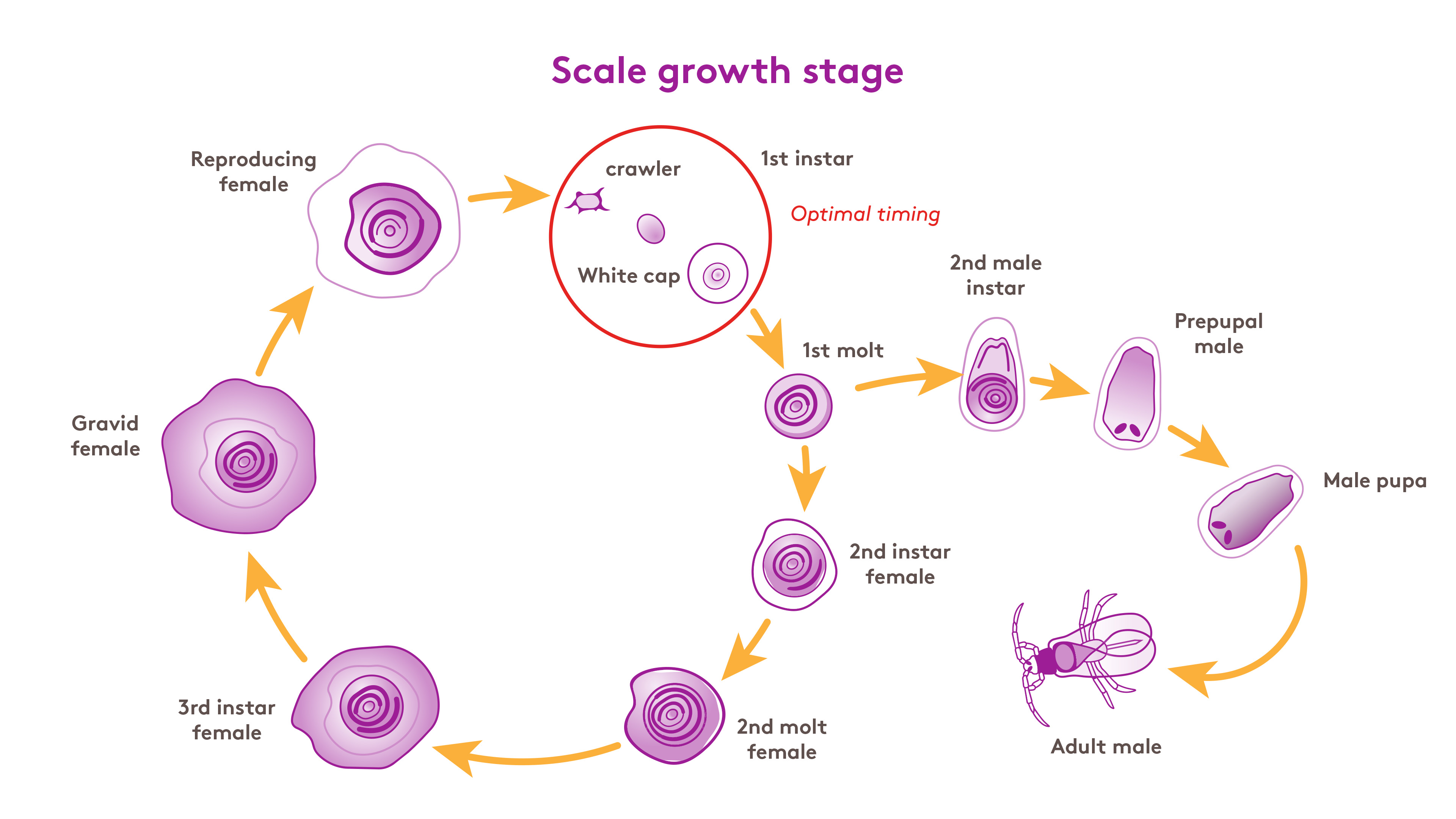
Scale growth stage image: For scale control in various crops. Monitor for early evidence of scale activity.
Scales:
Adult females are usually sedentary and lay eggs under their bodies. Crawlers then emerge and move around the plant prior to settling in place. For many crops you can commence applications immediately after peak flowering which should coincide with the onset of crawler emergence or when pest numbers reach economic threshold.
Continue to monitor crops and apply a second application no less than 21 days after the first application if required and if the label permits. Where applicable, use the higher rate under high pest pressure to provide longer residual control or when crops are dense. Apply thoroughly to ensure complete coverage using dilute spraying equipment.
Scale monitoring:
-
Visual inspections: Examine both sides of leaves, stems, twigs and branches for scale insects and associated damage
-
Use a hand lens: Inspect plants with a minimum 10x hand lens to detect crawlers and identify parasitised scales (exit holes). Adult female scales can be removed and examined to detect eggs or hatching crawlers.
-
Check life stages: Identify the presence of eggs, crawlers, and adult scales to determine ideal timing for Ateka.
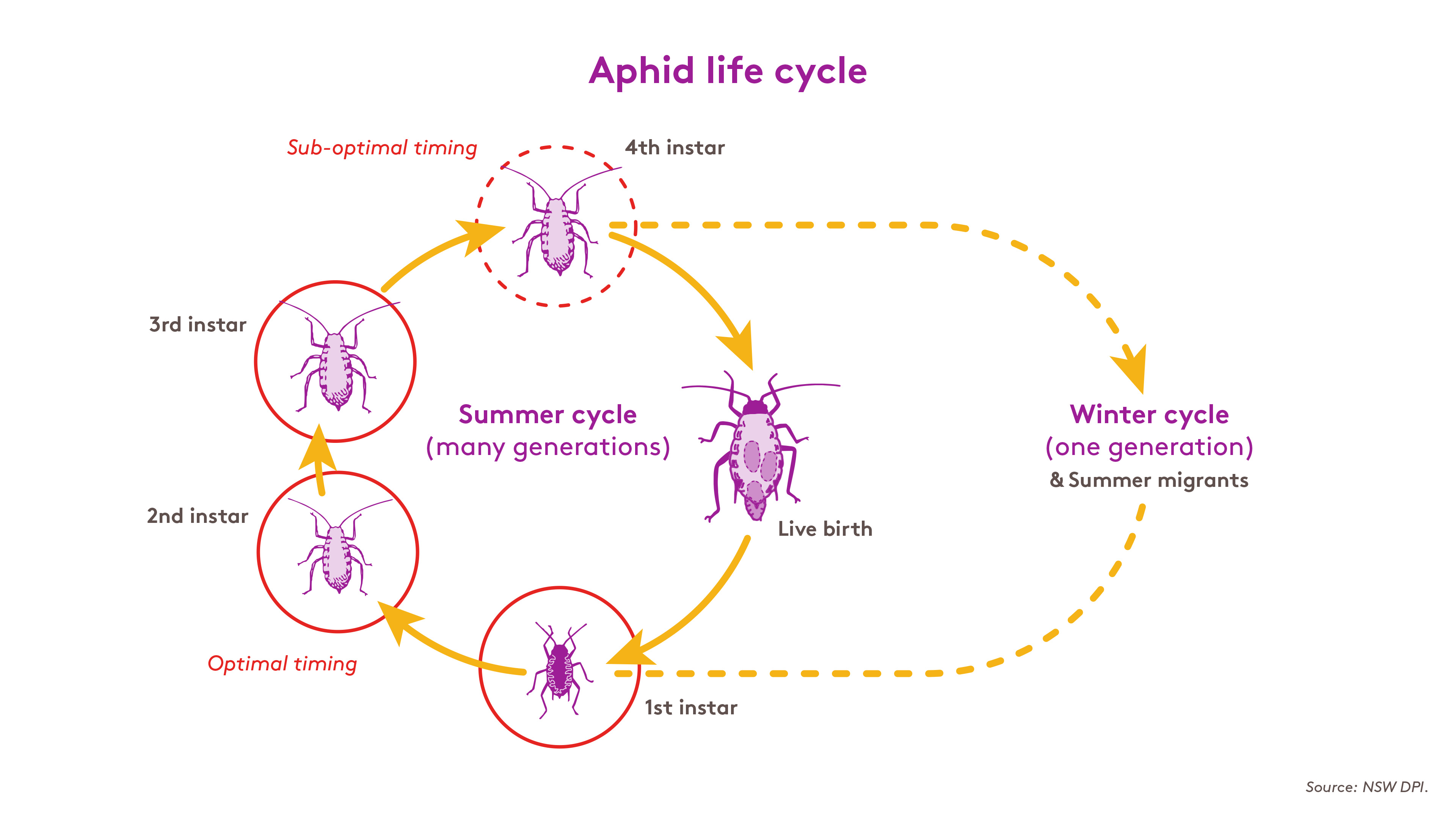
Aphid lifecycle image: Various aphid species are found in a wide range of crops across Australia. Identification of the specific type of aphid is important when assessing for thresholds and control options.
Aphids:
Adults can be winged or wingless and nymphs (instars) are similar in appearance but smaller in size. Aphids reproduce both sexually and asexually. The asexual cycle is usually suited to warmer environments and this cycle provides the foundation for the development of rapid insecticide resistance. Ateka works best on early instar aphids as this coincides with peak feeding.
Monitoring:
Inspect the underside of plant leaves across multiple locations within the field. The presence of aphids can be patchy, though they usually appear initially towards the outer edge of a field. Sometime visible symptoms of the plant are difficult to detect (plants may exhibit traces of honey-dew which is excreted by aphids when feeding), so accurate identification of the pest is important. In mild conditions one generation cycle can take less than 3 weeks.
Acknowledgements: pest cycle explanations compiled by ADAMA P&I with reference to Cesar Australia and NSW DPI.
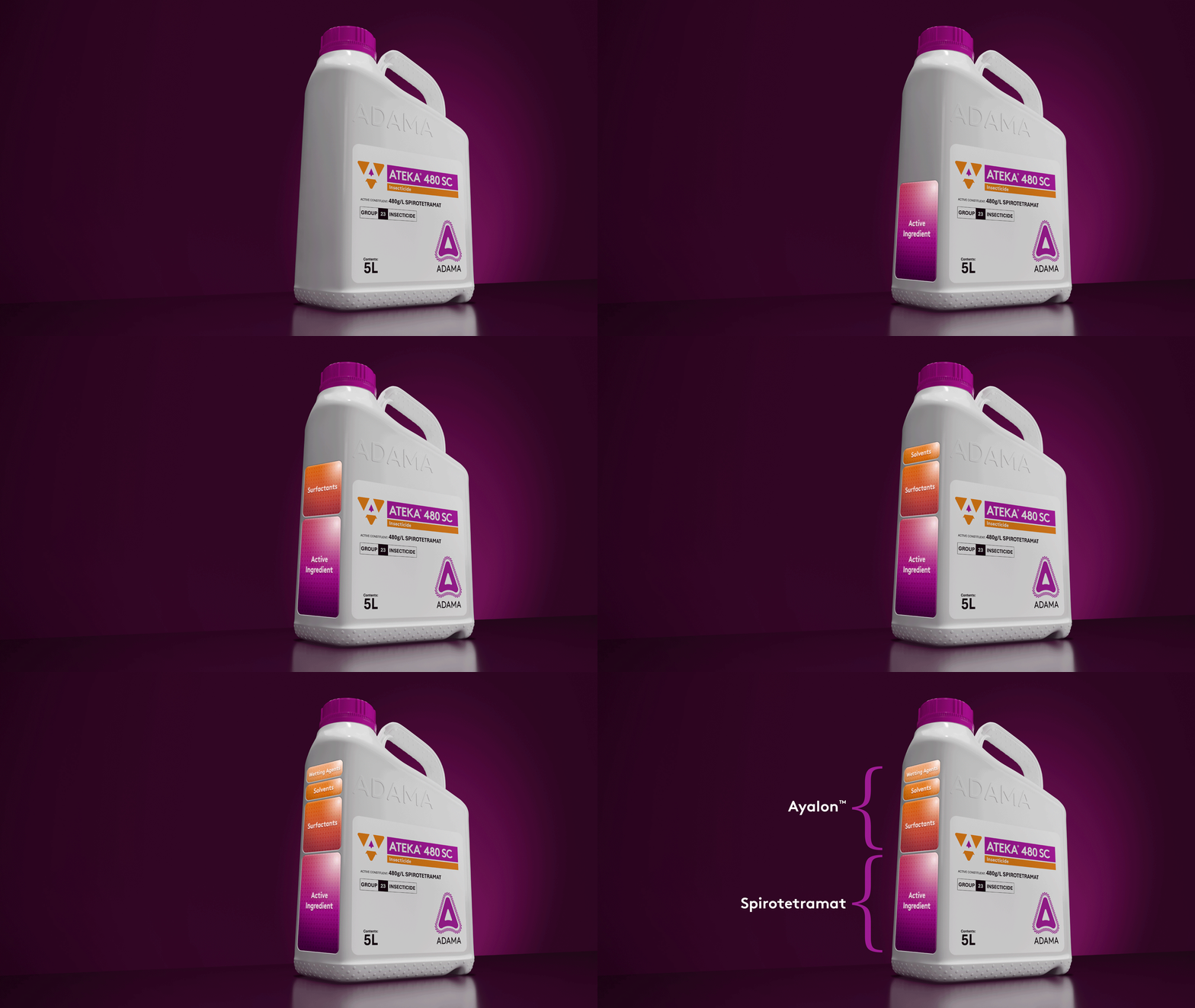
What is Ayalon™?
ADAMA's patented combination of 7+ surfactants, solvents and wetting agents to create a superior spirotetramat formulation.
What do they do?
Surfactants:
-
Improve solubility and dispersibility of the active ingredient
-
Improved dispersibility reducing runoff and wastage
-
Promote wetting, facilitating better penetration into plant material
Solvents:
-
Improve stability and enhanced application characteristics, making the formulation easier to spray.
Wetting agents:
-
Significantly reduces droplet surface tension
-
Improve absorption of spirotetramat
-
Provide rapid and uniform spreading & penetration on plant surface
Compatible or complementary products?
Products that may be used with Ateka.
-
Trivor - important scale control product for use in various fruit crops and an excellent rotation partner for Ateka
-
Lascar - Silverleaf whitefly IGR product that should be used in rotation with Ateka
-
Uptown - highly effective scale and mealybug product that is an excellent resistance management tool when used in rotation with Ateka
FAQs
What is Ateka?
Ateka is fully systemic insecticide with a unique mode of action for broad pest spectrum of sucking insects and mites.
When is the best time to spray Ateka?
Due to the systemic nature of Ateka and the unique mode of action it should always be sprayed on a preventive schedule or very early in the pest population development.
How does Ateka move in the plant?
Ateka is fully systemic. This means that once it enters the plant tissue it is translocated throughout the plant via the xylem and phloem. It will move quickly to the most active growing areas of the plant, new shoots and stems.
Should I add an adjuvant to my Ateka application?
Yes for best results you always use a penetrating type of adjuvant with your Ateka application. This ensures that the product will move into the plant tissue and become fully systemic.
How does Ateka work on pests?
Ateka is a lipid biosynthesis inhibitor (LBI), which means when a nymph or immature insect ingests Ateka, it is unable to complete the next molt and will die. It is critical to apply early in the insect population cycle to optimize product performance.
Is Ateka a “knockdown” insecticide?
Ateka has little “knock down “activity. Ateka must be ingested by the insect to be effective. It often takes several days for nymphs to molt and die.
Can I mix Ateka with other insecticides or fungicides?
Yes, Ateka is compatible with other pesticides. Do not use with fungicides that have a “sticker” type adjuvants added to the formulation as this may inhibit uptake into the plant. It’s recommended to do jar test to check for compatibility of components.