

Get Ahead of Nutgrass – Timing Control with Soil Temperature
For turf managers, this means effective nutgrass management isn't simply about controlling what you can see. Timing applications to interrupt the plant before it replenishes its underground tuber population can be an important part of a longer-term management strategy.
Soil temperature can provide an early warning
Research into nutgrass development provides turf managers with a useful biological indicator for timing early-season control.
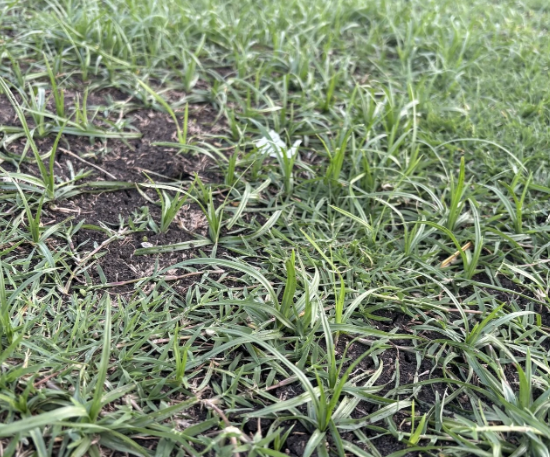
When soil temperatures at approximately 5 cm depth reach 18°C for seven consecutive days, nutgrass plants are entering an important stage of development.
At this point, leaf development is strong, providing plenty of actively growing foliage for foliar herbicide uptake, while significant new tuber formation is yet to occur.
This creates an opportunity to target actively growing nutgrass before the plant invests heavily in producing the underground tubers that contribute to future populations.
Rather than waiting until nutgrass becomes an obvious problem across the turf surface, monitoring soil temperature can therefore provide an early indication that it's time to start closely watching nutgrass development.
Why getting in early matters
Nutgrass owes much of its persistence to what is happening below the soil.
Individual plants can produce underground tubers – often referred to as "nuts" or "nutlets" – which act as energy reserves and allow the weed to regenerate. Over time, continued tuber production can build a substantial underground population.
Controlling the foliage after this underground population has already been replenished may improve the appearance of the turf, but it doesn't necessarily prevent the next generation of plants from emerging.
The objective of an early program is different:
Target active plants early → reduce their ability to produce new tubers → reduce future population pressure.
Repeated over time, this approach can help shift nutgrass management from continually reacting to visible outbreaks towards progressively reducing the population.
Where does Nutmeg fit?
Quali-Pro® Nutmeg® Herbicide contains 480 g/L bentazone and is registered for the control of Nutgrass and Mullumbimby Couch, along with a range of broadleaf weeds, in established turf.
Bentazone is a contact herbicide that works by inhibiting photosynthesis. Because activity is primarily through treated foliage, thorough spray coverage is essential.
The Nutmeg label recommends application to Nutgrass just prior to flowering and where there is adequate soil moisture, with a follow-up application after 2–4 weeks if sufficient new growth warrants retreatment. Higher rates are recommended for dense infestations.
For best performance, applications should target healthy, actively growing weeds rather than plants suffering from environmental stress.
Don't forget the fundamentals
Herbicides are only one part of effective nutgrass management.
Nutgrass commonly thrives where conditions favour its growth, particularly in moist or poorly drained areas. Where infestations continually return in the same locations, consider what may be encouraging the weed.
Improving drainage, avoiding unnecessary overwatering, relieving soil compaction and maintaining a healthy, competitive turf canopy can all complement a targeted herbicide program.
This month's tip
Start watching soil temperatures before you're watching large nutgrass populations.
Once soil temperatures at approximately 5 cm depth have remained around 18°C or above for seven consecutive days, begin monitoring nutgrass closely for active growth and development.
Getting onto populations early – and following up where required – provides an opportunity to interrupt the cycle before another generation of underground tubers adds to next season's problem.
Think beyond the plants you can see. The real goal is reducing the population you can't.
Quali-Pro® Nutmeg® Herbicide
Active ingredient: 480 g/L Bentazone
Target weeds: Nutgrass, Mullumbimby Couch and certain broadleaf weeds
Nutgrass rate: 2–4 L/ha in 200–500 L water/ha
Application: Apply just prior to flowering where there is adequate soil moisture. Follow up after 2–4 weeks if sufficient new growth warrants retreatment.
Always read and follow the product label before use.
Media Contact:
Cam Stuart | General Manager - Non-Crop | E: Cameron.stuart@adama.com