

Highly anticipated new multi-site grape fungicide ticks all boxes
AUSTRALIAN grape growers are now armed with a unique multi-site fungicide that is already widely used around the world for its minimal impact on beneficial insects, plus its ability to prevent the build-up of resistance of fungal strains to single site mode of action fungicide groups.
With registration approved for this season, Folpan® 800 WG is a Group M04 fungicide containing folpet as the active ingredient, providing preventative control for downy mildew and botrytis plus other key diseases.
Viticultural advisors and growers have already seen the new fungicide working across vineyard trial sites throughout Australia’s major growing regions and have been impressed with the results.
Developed by global crop protection supplier, ADAMA Australia, Folpan will ideally be applied as a protectant cover spray in preventative programs and it has excellent compatibility with single site, systemic partner fungicides.
Daniel Polson, Market Development Manager - Horticulture with ADAMA Australia, said it had been several decades since an alternate multi-site fungicide had been launched in Australia.
He said some multi-site molecules had recently been banned in the European Union and other export markets, while others remained under review, which could limit the multi-site fungicide options available for Australian producers.
“The good news is that folpet has recently been approved out to 2039 through the EU’s stringent assessment process, and it already has established export MRL (maximum residue limit) status in Australian export markets,” Daniel said.
“Extensive wine fermentation and sensory studies have also been completed in Australia as part of the local trial work.
“Folpan has the benefit of containing a new, unique active ingredient that acts across different cellular levels, which will help prolong the life of single site fungicide products when used strategically in combination across the growing season.”
He said Folpan would be a cost-effective option for growers early in the season to protect against powdery and downy mildew, and, with activity extending to botrytis as well, it would be used over flowering with minimal impact on key beneficial insects including honey bees, lacewing, parasitic wasps, predatory mites and ladybirds.
Courtney Lean, Horticultural Agronomist with Nutrien at Berri in South Australia’s Riverland region, saw Folpan applied with low and high rates of sulphur at a trial site at Faraday in Victoria’s Macedon Ranges under high powdery mildew pressure and was impressed with its performance at the lower sulphur rates.
Courtney said numerous Riverland growers have used high rates of sulphur in their programs in recent seasons as an affordable option against powdery mildew and its impact on beneficial insects may have contributed to higher populations of mealybug and scale.
She said the ability to use lower rates of sulphur with Folpan could be a potential option to help reduce the impact of sulphur on beneficial insects in crop canopies whilst maintaining strong control of powdery mildew.
“The information presented at Faraday included the low impact of the product on beneficial arthropods,” Courtney said.
She said hot conditions in the Riverland in recent years also resulted in some late-season sulphur burn on sensitive varieties, so the option to use Folpan™ 800 WG and reduce sulphur rates to prevent damage associated with phytotoxicity, particularly in high-value white varieties, could be a major benefit.
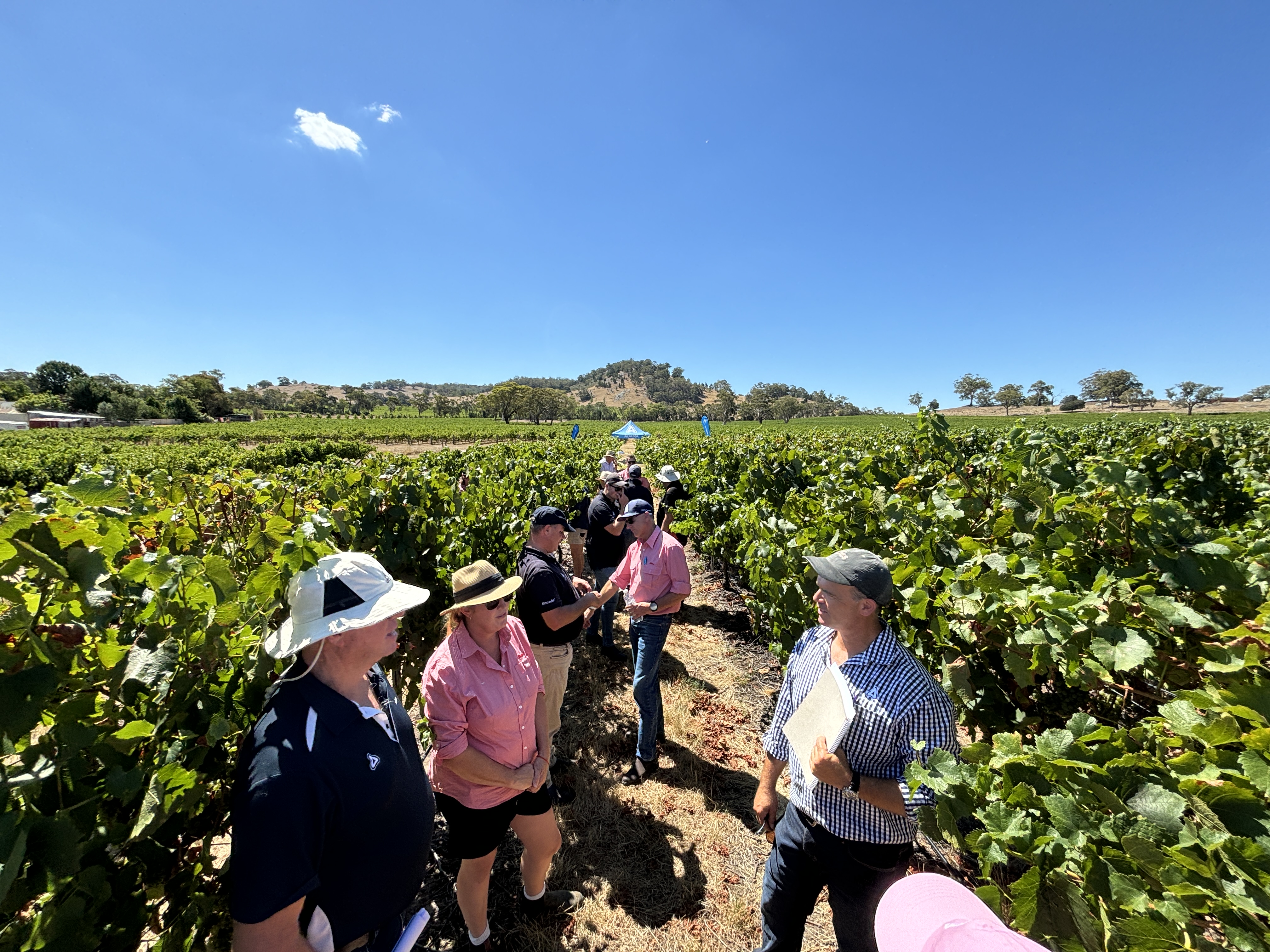
ADAMA Australia team pictured with Elders at the Folpan trial site at Faraday in Victoria’s Harcourt Valley
Adrian Utter, Horticultural Agronomist with Muirs in Victoria’s Yarra Valley, said the differences between the untreated area and the Folpan applications at the Faraday trial were strong.
Adrian said high rainfall and humidity in the Yarra Valley region can often result in high powdery mildew and downy mildew pressure, and, hence, a new mode of action, multi-site fungicide such as Folpan, which can help reduce resistance development to important systemic and curative fungicides, would be appealing.
“We definitely see a fit for mixing an affordable multi-site fungicide, that’s not going to build-up resistance, into our programs,” Adrian said.
He said increased awareness of copper build-up in soils and greater restrictions on the use of Captan and mancozeb also had left a gap in multi-site alternatives for control of downy mildew.
Media Contact:
Isabelle Andrew | Digital Marketing & Events Manager | D: 0400 544 983 |