

Pest Profile: Fusarium Head Blight/Scab
Fusarium Head Blight is a fungal disease caused by several Fusarium species, the most predominant being Fusarium graminearum. This pathogen affects small grain cereals as well as some forage grass species, and reduces grain yield, grade, and limits end use purposes due to mycotoxins found in the grain. It was initially found in Eastern Canada, however since the early 1990s it has been found in the prairies and has continued to spread west.
Symptomology:
Infections become apparent towards the end of July or early August. Infections appear as water-soaked spots at the base of the glume, leading to the spikelets of the plant being bleached. Generally the infected spikelets become sterile. Under humid conditions, mycelia with an orange/pink tinge can become visible on infected spikelets. Symptoms and infections can occur rapidly, within days. In harvested grain, kernels are shrunken and chalky with a “tombstone” appearance.
Disease Cycle
- Mycelia/spores overwinter on crop residue
- Seedlings are infected during emergence causing seedling blight and contaminated crop residue
- Spores are produced and are dispersed through wind (ascospores) or rain-splash (conidia)
- Wind or rain-splash infects seed heads, producing head-blight
- Fungal spores survive in fields through contaminated crop residue or contaminated seeds.
Risk Factors:
- High rainfall and warm conditions during anthesis (flowering) promote disease development
- Ideal temperatures are 25-30C and moist conditions during anthesis (flowering)
- Location – in areas where the disease is well established such as the Red River Valley, crop rotation and variety selection are crucial
- Contaminated seed
- Presence of corn in the rotation
Impacts on grain end use:
- Production of deoxynivalenoln (DON) mycotoxin can affect feed intake, reproduction and immune response in livestock. Pigs are especially susceptible
- DON increases during malting process; contaminated barley is unacceptable for malting purposes
- Milling and baking quality in wheat is degraded due to altered proteins
Management:
- Crop rotation to non-susceptible crops. Minimum of 2 years is advised.
- Seed treatment & clean seed to reduce seedling blight
- Residue management through straw chopping and spreading or straw removal
- Variety selection
- Foliar fungicides
Always read and follow label directions.
References
Fusarium Head Blight | Disease | Government of Saskatchewan Date accessed June 28, 2026
Province of Manitoba | agriculture - Dealing with Fusarium Head Blight Date accessed June 28, 2026
Fusarium head blight – Overview | Alberta.ca Date accessed June 28, 2026
K.L. Bailey et al. Diseases of Field Crops in Canada. The Canadian Phytopathological Society, 2003. p. 38-39, 105-106
Related Products
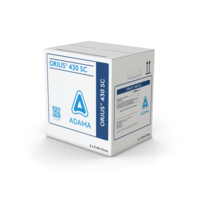
ORIUS® 430 SC
Offers long-lasting, broad-spectrum protection against the most dangerous cereal leaf and head diseases with the flexibility of a wider application window.
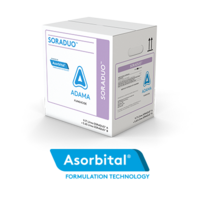
SORADUO™
Advanced disease protection powered by Asorbital® Formulation Technology. SORADUO™ provides proven fusarium protection in wheat and barley.
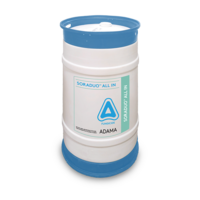
SORADUO™ ALL IN
Get two proven active ingredients for fusarium and broad-spectrum cereal leaf diseases. Now in a convenient formulation and bulk packaging.