

Pest Profile: Bertha Armyworm
Photo Credit: Canola Council of Canada
Description:
- Eggs are laid in clusters of 50-100 on the lower surface leaves of host plants
- Eggs are pinhead in size
- Eggs start as white but get darker as they mature
- Eggs hatch within a week of being laid on average
- Newly hatched larvae are 0.3cm long, pale green, with a yellowish stripe on each side making them difficult to differentiate from Diamondback Moths
- Small larvae when disturbed may drop off leave by silk thread much like diamondback moths
- Large larvae usually drop off the plants when disturbed and curl up in a fashion very typical of armyworms and cutworms
- Larvae take up to approximately 6 weeks to fully develop
- Larvae colouring may be variable during development
- Larvae are about 4cm long with light brown head
Damage: (caused by Larvae)
- Adults do not cause crop damage
- Larvae chew on underside of leaves, primarily canola
- If leaves fall in canola before larvae are grown, they will switch to eating pods and seeds
- As larvae grow thru instars the 5th – 6th instar stage(1.5-4cm) cause the most damage
- The preferred food in flax is the flax flowers making it very risky to yields
Lifecyle:
Bertha Armyworm
- Single Generation per year in Saskatchewan
- Bertha Armyworm overwinter in the soil as pupae
- Emerge as adults in spring
- Start laying eggs in mid-July to beginning of August
- Larvae start to bury into the soil late august to early September as temperatures drop
Economic Thresholds and Control Options
Canola Economic Thresholds:
- Pheromone traps baiting for adult male moths are a good indicator of potential outbreaks. When traps reveal >1200/week fields need to be monitored in the following weeks for larvae.
- The economic threshold for larvae is variable based on expected price of your crop and cost of insecticide application
Flax Economic Threshold:
- Flax is not a preferred crop but if you do have a flax infestation the economic threshold would be lower than canola
Control Options:
Contact products can be effective, but timing is difficult to get Larvae at proper staging as the smaller they are the harder to contact. Residual products can be used which are more costly, but can provide extended control. Best results occur when spraying in the morning or early evening when larvae are up in the canopy feeding.
Practical Tips:
- The active ingredient in SILENCER® 120 EC targets the nervous system of insects, specifically the sodium channel. Insect biology is such that the sodium channel is not active when temperatures are high. To achieve optimal efficacy, applications should be made when temperatures are at or below 25ºC.
- The active ingredient in COSAYR ®works as an ingestion insecticide with no movement thru the plant targeting the ryanodine receptor in the muscles. Once bound to this receptor the muscle cells begin to leak calcium, which prevents normal function. The insect is paralyzed and dies. COSAYR® can be used at higher temps with minimal impact on beneficials & pollinators.
- SILENCER® DUO is a combination of both products SILENCER® 120 EC & COSAYR® providing knockdown and residual control, with temperature restrictions eliminated.
Labelled Rates & Rate Ranges
SILENCER® 120 EC
- 34ml/ac – 110 acres/3.785Litre jug
COSAYR®
- 51 ml/ac-118acre/6Litre jug
- Rate for small larvae minimum of 13 mm up to 25mm long. Crop stage and environmental conditions impact length of residual control which is approximately 7 days.
- 101 mL/ac (60 ac/6L jug)
- Larvae are larger (~ 25 mm) and/or populations are high. Crop stage and environmental conditions impact length of residual control which is approximately 14 days.
- 151 mL/ac (40 ac/6L jug)
- Larvae exceeding lengths of 38 mm or high populations. Crop stage and environmental conditions impact length of residual control which is approximately 21 days.
SILENCER® DUO
- 240 acres/case (case contains 2 x 6.06Litre jugs of SILENCER® DUO & 2 x 4.03Litre jugs of SILENCER® DUO B)
- 51ml/acre of SILENCER® DUO A (Chlorantraniliprole) & 34ml/acre SILENCER® DUO B (Lambda-cyhalothrin)
References:
Bertha armyworm – Overview | Alberta.ca
SILENCER® 120 EC | ADAMA West Canada
Bertha Armyworm - Overview, Economic Thresholds and Control | Insects | Government of Saskatchewan
Related Products
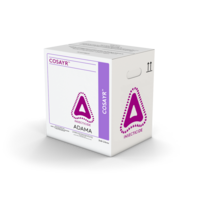
COSAYR®
A long-lasting diamide insecticide, which quickly controls chewing insects like flea beetles, grasshoppers, cutworms and more!

SILENCER® 120 EC
Most trusted active ingredient used in Western Canada to control a wide range of insects in field, tree fruit and horticulture crops.
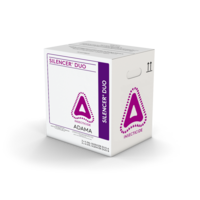
SILENCER® DUO
Dual mode insecticide for resistance management with both superior knockdown and extended control of the most harmful insects.