

Cabbage Seedpod Weevil
Cabbage seedpod weevil adult on a canola plant; photo credit: Shelley Barkley - courtesy of Canola Council of Canada
Description:
Adults
- Approximately 3-4 mm long
- Ash grey
- Prominent curved snout (proboscis) that is characteristic of long-snouted weevils
Mature larvae
- 2-3mm long with a whitish body
- Brown head and anal plate
- legless
Damage(caused by larvae and adults):
Adults
- Feed on developing flower buds, causing bud blasting (generally does not affect yield if crop is not stressed from drought)
- Will feed on pods in late canola crops
- Individual eggs are deposited in a hole chewed by the female in the wall of a developing pod
Larvae
- The larvae hatch and feed within the pods (about 5 seeds/larva over their 2-3 week lifespan)
- Exit by chewing a small circular hole in the pod walls
- The egg laying hole from the adult and the exit hole from the larvae can contribute to pod shatter and allow disease to enter that further reduces yields
Lifecyle:
- Adults overwinter in the soil beneath leaf litter in field margins like tree shelterbelts, roadside ditches and woodlots and emerge in the beginning of April to feed and mate.
- Females lay up to 250 eggs in pods, usually only one egg is laid per pod. Two or more eggs can be laid per pod during outbreaks. Larvae are competitive and typically only one survives within the pod.
- Eggs are very small, oval, and opaque white and hatch in about six or seven days.
- Females continue to lay eggs until they die later in the season.
- Larvae are small, white, grub-like, and hatch from eggs. They feed on developing seeds for about 2-3 weeks (they enter and then drop to the soil to begin pupation in earthen cells).
- The adults will emerge 10 days from the soil and feed on immature canola.
- It takes approximately eight weeks for cabbage seedpod weevils to develop from an egg to an adult.
- One generation per year.
Hosts:
- Host plants of the cabbage seedpod weevil all belong to the mustard family and cruciferous weeds.
- Host plants are either true hosts or food hosts. Both hosts can provide food, especially pollen, for adult feeding, but only those with large seedpods that can sustain larval development are true hosts.
- Yellow mustard is resistant to cabbage seedpod weevil.
True (Larval) Hosts:
- Canola
- Brown and oriental mustard
- Wild mustard
Food (Adult) Hosts:
- Cole crops (cabbage, broccoli)
- Flixweed
- Stinkweed
- Hoary cress
Economic Thresholds and Control Options
Economic Thresholds:
- 25-40 weevils per 10 sweeps
- Greater tolerance can be used when the crop is not under stress.
- Economic damage is often greatest along field edges, as adults typically invade from overwintering sites located in adjacent shelterbelts, ditches, and field margins.
Control Options:
Biological:
- Minimal impact of populations
- Two species of parasitoids, Microctonus melanopus (Ruthe), a wasp that parasitizes adult weevils, and Trichomalis perfectus (Walker), a wasp that attacks weevil larvae within the pods.
Cultural:
- Potential to plant a trap crop of an earlier flowering canola variety, or seed a trap crop of the same variety 7-10 days earlier to concentrate emerging adults along the field margins for more efficient insecticide treatment if warranted
Chemical:
- Do not spray too soon, as the weevil will typically continue to invade for at least a week to 10 days beyond the opening of the first flowers; damage does not occur until pods are large enough for egg laying.
- Insecticide application targets adults when crops are in the 10-20% flower stage to avoid eggs being laid in newly formed pods
- If insecticide application is required, spray in the morning or evening when temperatures are between 15-24 degrees Celsius for best results and to protect pollinators/beneficials
- Applying insecticides prior to full bloom ensures that fewer pollinators will be around the plants when they are sprayed.
- Avoid spraying under a strong temperature inversion or when temperatures exceed 25 degrees Celsius.
Practical Tips:
- Yellow mustard is resistant to cabbage seedpod weevil, but economic damage can occur in brown and oriental mustard and camelina.
- When disturbed, adults will drop to the ground and play dead.
- Monitoring for adults can be done by sweeping fields at bud to flowering stage. Take 10 180° sweeps at ten sites following a “W” pattern across the field from a field margin
- Risk of infestation can be predicted based on the adult population of the preceding fall, so high numbers of weevil adults in the fall likely means significant infestation levels in the following spring.
- A severely cold winter with little snow cover could reduce the survival of over-wintering adults.
- A few other weevil species may also be found occasionally in canola, but these don’t require control measures. The most common is a closely related species, Ceutorhynchus neglectus. It is one-half the size of the cabbage seedpod weevil which will feed on canola but prefers flixweed.
- Canola pods with larvae in them might look distorted. When larvae consume some seeds within pods, the undamaged seeds enlarge and mature, often leaving misshapen pods.
- Control alternative host plants, including brassicaceous weeds and volunteer canola (especially if flowering early) in all crops prior to the bud stage of the canola crops.
- The mean temperature required for a flight height of one metre is 12 degrees Celsius, and flight height increases with temperature. However, increases in relative humidity are associated with reduced flight heights and dispersal distances. So, cold, wet springs can result in lower cabbage seedpod weevil infestations.
- Seeding later in spring, at recommended seeding rates, can help reduce weevil infestations and damage
- Research suggests females may prefer plants with higher sulfur levels and lower nitrogen concentrations, which can influence feeding and egg-laying behavior.
Always read and follow label directions.
Referenced literature and additional information:
Canola Council of Canada (2025). Cabbage Seedpod Weevil. https://www.canolacouncil.org/canola-encyclopedia/insects/cabbage-seedpod-weevil/
Government of Saskatchewan (2025). Cabbage Seedpod Weevil 2025 Update. https://www.saskatchewan.ca/business/agriculture-natural-resources-and-industry/agribusiness-farmers-and-ranchers/crops-and-irrigation/insects/cabbage-seedpod-weevil
Minister of Agriculture ad Agri-Food Canada (2018). Field Crop and Forage Pests and their Natural Enemies in Western Canada: Identification and Management. https://publications.gc.ca/collections/collection_2018/aac-aafc/A59-23-2018-eng.pdf
Saskatchewan Ministry of Agriculture. (April 2025). 2025 Crop Diagnostic Handbook. https://pubsaskdev.blob.core.windows.net/pubsask-prod/136326/CDSH2025-web-opt.pdf
Saskatchewan Ministry of Agriculture. (2025). 2025 Guide to Crop Protection. https://pubsaskdev.blob.core.windows.net/pubsask-prod/153662/SK-G2CP-2026.pdf
Related Products
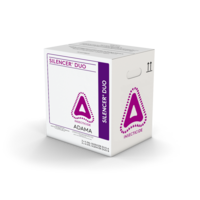
SILENCER® DUO
Dual mode insecticide for resistance management with both superior knockdown and extended control of the most harmful insects.
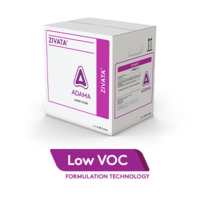
ZIVATA®
An innovation in insect control giving you the same trusted results in a more sustainable formulation with a better user experience.