

Multi-site fungicide pays for itself by boosting cereal yields by 0.3t/ha
After the drought-induced challenges of 2025, and with wheat markets showing little sign of improvement after last year’s drop, UK arable growers are looking closely at this year’s crop input expenditure.
We understand this sentiment and encourage growers and agronomists to appraise the return on investment of each and every penny spent on crop protection. It's also important to understand what the potential of the crop is in order to make the right decisions to maximise output. UK growers currently have some fantastic looking crops in the ground, and it would be a shame to let their yield potential fall by the wayside simply because they weren’t adequately protected against diseases such as septoria in wheat and ramularia and rhynchosporium in barley.
Last year’s drought meant cereal disease pressure was exceptionally low, so it’s not surprising growers are questioning their level of fungicide spend. But, with crops drilled earlier, and this year starting wet and mild, disease pressure could explode, especially as the inoculum for diseases like septoria will already be present in crops, waiting for the opportunity to rise through the canopy as soon as plants start growing in the spring.
One of the main reasons for including a multi-site fungicide in spring spray programmes has been to protect single site chemistries such as azoles, SDHIs and Qil actives. That’s an important consideration, but in the current economic climate, that isn’t enough on its own to warrant folpet’s inclusion.
Proven performance
When selecting suitable products for spring disease control programmes, each input should earn its place, which is why ADAMA has been testing ARIZONA® to assess its real value in terms of crop performance and its ability to enhance yield. Seven years of trials data has proven that ARIZONA® not only protects newer chemistries, but it also returns an average yield benefit of just over 0.3t/ha.
In high pressure seasons such as the wet years of 2023 and 2024, the inclusion of ARIZONA® is a no-brainer. But because ARIZONA’s performance is remarkably consistent irrespective of how the weather unfolds, a yield improvement can also be expected in very dry years when latent disease pressure is low. In fact, trials carried out during the drought in 2025 showed that ARIZONA® still contributed to more resilient crops and higher yields.
Protecting wheat
In wheat, ARIZONA® can be used from T0 through to T2, but the key timings for its inclusion to protect against septoria are at T1 (when it delivers the biggest yield uplift) and at T2 when it also provides a valuable increase in crop output by keeping the crop’s upper canopy greener for longer.
However, for the very best results, a programmed approach of inclusion at T1 and T2 is recommended, with the T0 timing also useful in scenarios where disease pressure is elevated earlier in the season.
Safeguarding barley
From a resistance perspective, ramularia is more aggressive at breaking single site chemistries than septoria, so including a multi-site chemistry is even more essential in barley. And, just as it does in wheat, ARIZONA® provides a proven uplift in barley yields to ensure grain stores are full at the end of harvest.
To control ramularia, net blotch and rhynchosporium, ARIZONA® should be applied at T2. It can also be used at T1 to give protection against rhynchosporium and net blotch, and to provide extra protection against ramularia in high-risk situations. It can also be used at T3 to maintain canopy protection in situations where the season is extended.
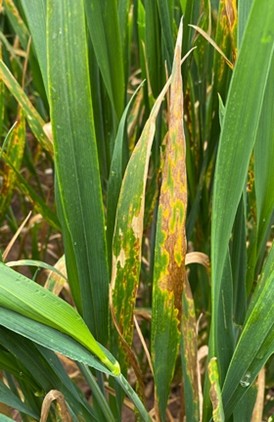
The inoculum for diseases like septoria will already be present in crops waiting for the opportunity to rise through the canopy as plants start to grow in the spring.
The bottom line is ARIZONA®. When margins matter, choose performance that pays.
ARIZONA® (folpet 500 g/l) is a unique multi-site fungicide that provides valuable protection against key diseases in wheat and barley. ARIZONA® delivers a reliable return on investment through enhanced disease control and safeguards the efficacy of partner products as part of an anti-resistance strategy.
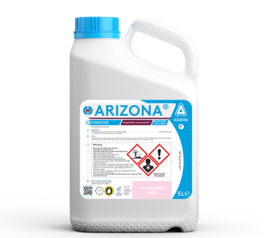
- ARIZONA® enhances septoria control in wheat and can also provide a useful reduction of yellow and brown rusts. It also offers intrinsic activity against mildew.
- ARIZONA® also safeguards barley against ramularia, net blotch and rhynchosporium.
- Seven years of trials data has proven that ARIZONA® delivers an average yield benefit of just over 0.3t/ha.
More information
To find out more, please contact your Regional Agronomy Manager by calling the ADAMA technical helpline on 01635 876 622 or via email at ukenquiries@adama.com


